I connected a martial-arts school’s website, search, content, scheduling, lead nurturing, and front-desk processes into one acquisition-to-enrollment system. The work made the journey easier for families to trust and easier for a small staff to operate.


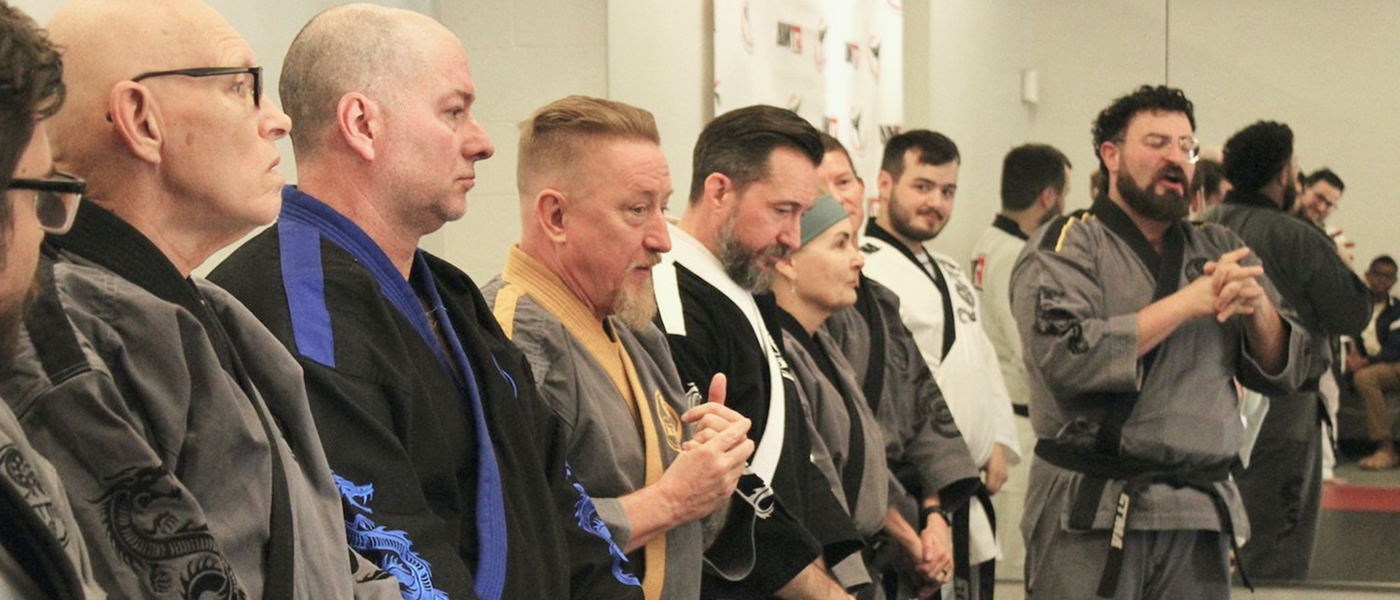
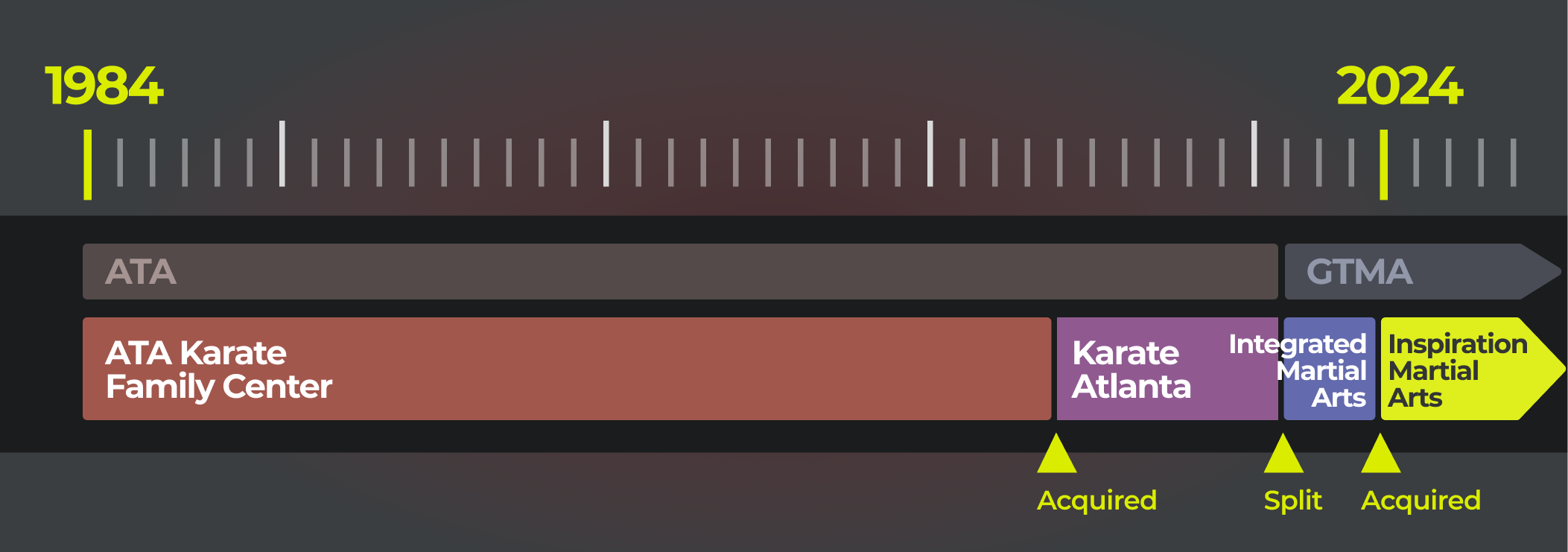
A 40-year-old taekwondo school was navigating an ownership transition, having been acquired by the Inspiration Martial Arts brand. Decades of instructional credibility and referrals had sustained it, but its marketing and intake practices hadn't kept pace with digital discovery, automation, or how families choose a school today.
I treated the work as one integrated service system: social media repositioned as a trust channel, an automated eight-week enrollment journey, and CMS patterns that scaled from two locations to three, all built around a revamped, rebranded new website. Qualified leads doubled, organic visibility rose 30%, and content-production time fell 60%.


Problem
A 40-year school changed hands with its growth systems stuck in an earlier era
Inspiration Martial Arts, as the school was now known, had sustained itself for four decades on instructional credibility, referrals, and community presence: strengths built during a 1990s population boom and still carrying the school into the 2020s. When new ownership acquired and consolidated the school, they inherited that trust along with marketing and intake practices that predated digital discovery, lead nurturing, and automation entirely.
The transition put every public signal in play at once
Consolidation meant a relocated senior location, a transferred phone number, and an identity spread across a website, social platforms, review boards, Google Business profiles, and old domains. Program information was hard to compare, follow-up depended on staff memory, and the front desk was already overloaded. At exactly the moment the school's public consistency mattered most, simply generating more inquiries without fixing intake would have poured more families into an unreliable process.
insight
How were buyers losing confidence after contact?
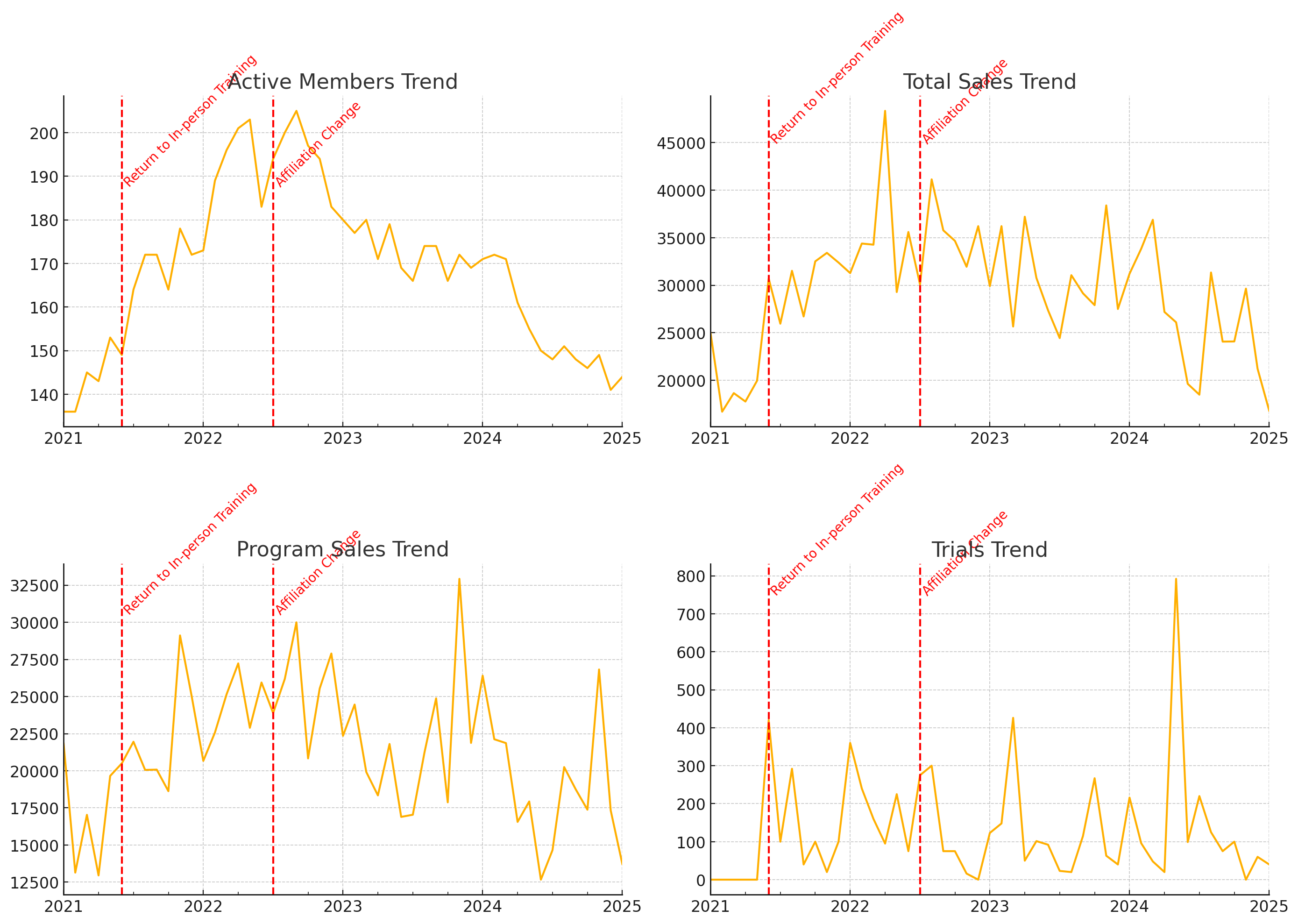
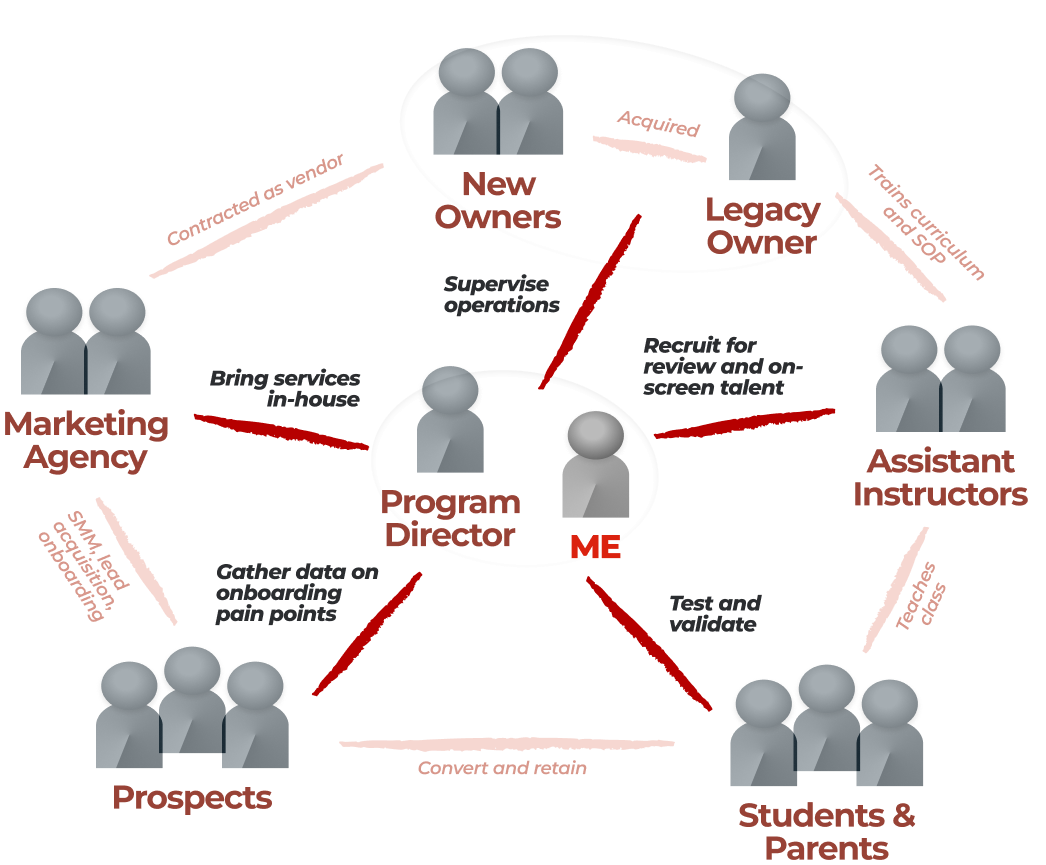
Working inside daily operations let me compare data with what happened at the desk. I reviewed attendance, inquiry progression, seasonal behavior, and search performance while observing unconfirmed appointments, trial-day anxiety, unclear next steps, and follow-up dependent on staff memory. These were operational observations rather than formal qualitative interviews.
Trust broke in the handoff between channels and people
The website, social media, scheduler, front desk, and instructors each handled part of the journey, but nothing reliably connected them. Every missed handoff became uncertainty about the school itself. The opportunity was therefore not simply better marketing, but a more predictable experience from discovery through enrollment.
Jobs to be done: When families compare schools, they need clear programs, credible evidence, and timely reassurance so they can trust the organization before they ever walk in.

Laci

João
Ron
decision
More leads, just the website, or a full connected service?
Research showed that families were losing confidence across multiple touchpoints, not simply failing to discover the school. I considered three scopes:
- Increase lead generation — Improve promotion, search, and acquisition while leaving intake and follow-up largely unchanged.
- Modernize the public experience — Rebuild the website, brand, social presence, and scheduling without redesigning staff operations.
- Connect the complete enrollment service — Redesign discovery, social proof, inquiry, scheduling, nurture, staff follow-up, and early onboarding together.
Design tension: The school needed modern growth systems without losing the relationships and community trust built over 40 years.
I chose the full service, because lead volume wasn't the bottleneck
The integrated system stabilized trust across channels, gave the school a useful digital front door, repositioned social media around authority and authentic culture, and replaced manual handoffs with workflows staff could realistically adopt. New locations would inherit the documented system rather than rebuild it. The tradeoff was giving up a faster website-only win for the less visible operational work that determined whether inquiries became enrollments.

Gallery
I stabilized the identity around authentic trust signals
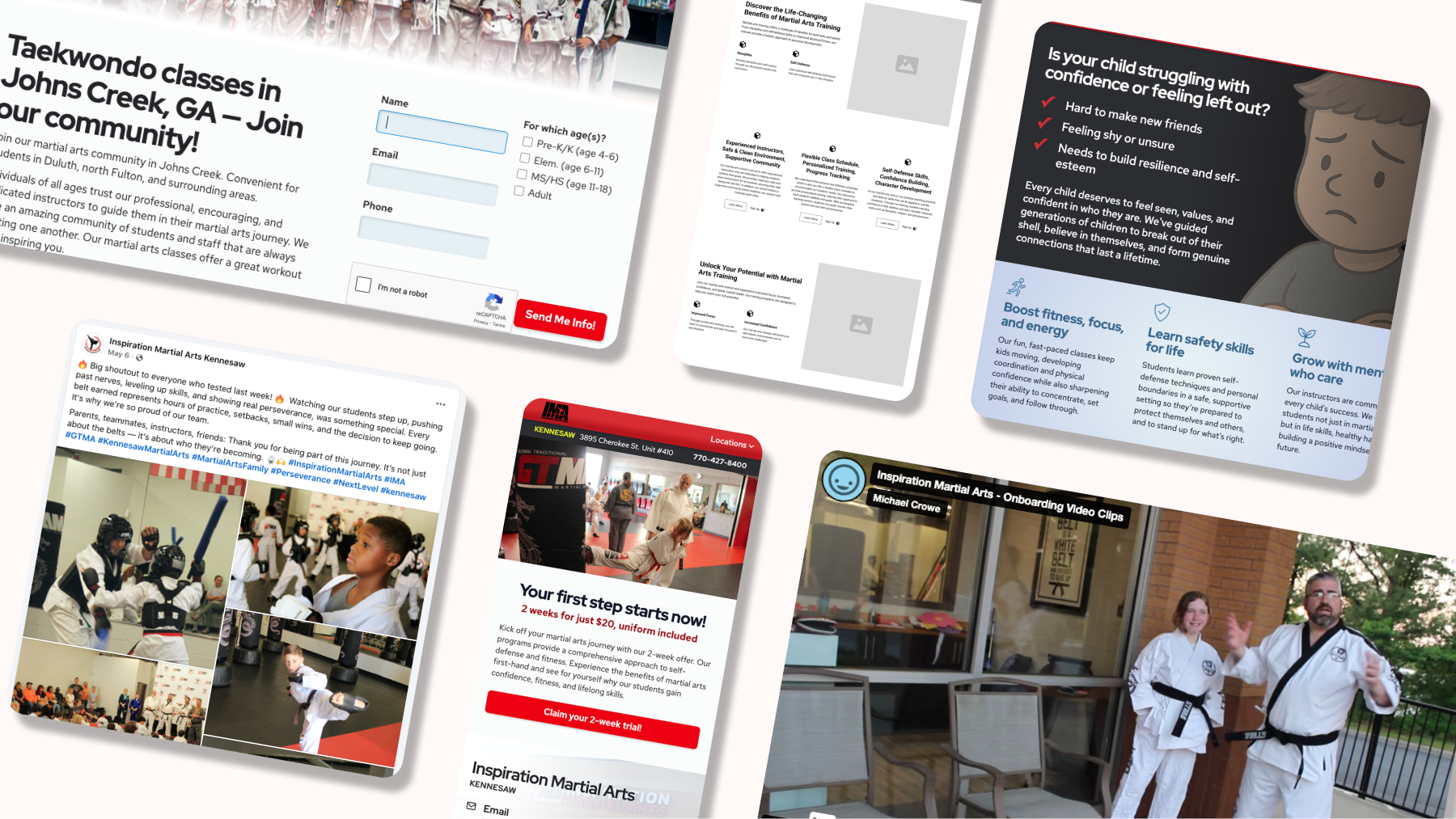
The ownership transition and earlier agency work had left the identity fragmented across web, social, signage, and print. I consolidated color, typography, proportions, voice, and reusable treatments into a system any location or contributor could apply, and replaced generic stock imagery with the school's real students, instructors, and events, making authentic culture the primary trust signal.



I positioned social media to communicate trust and authority
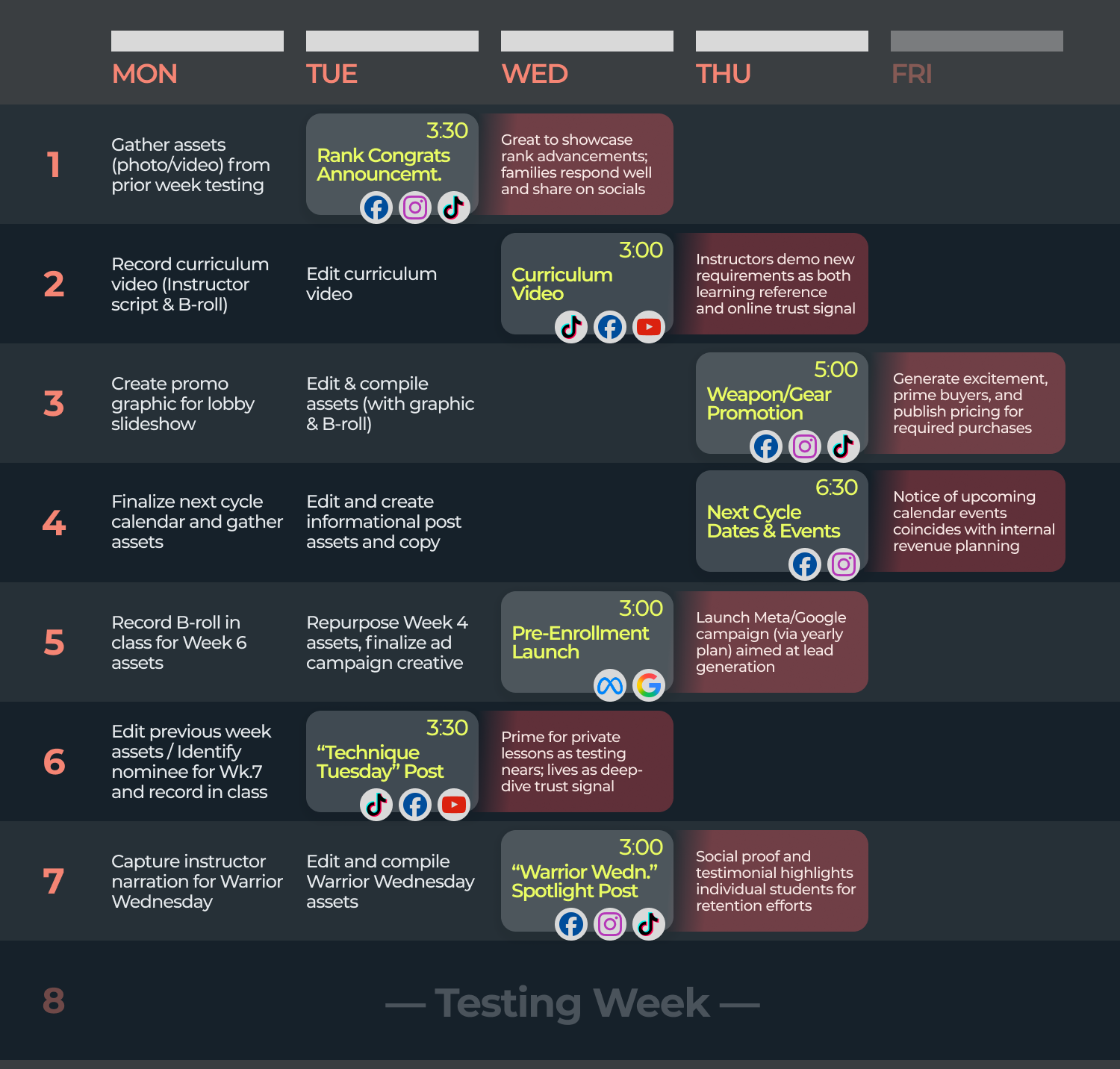
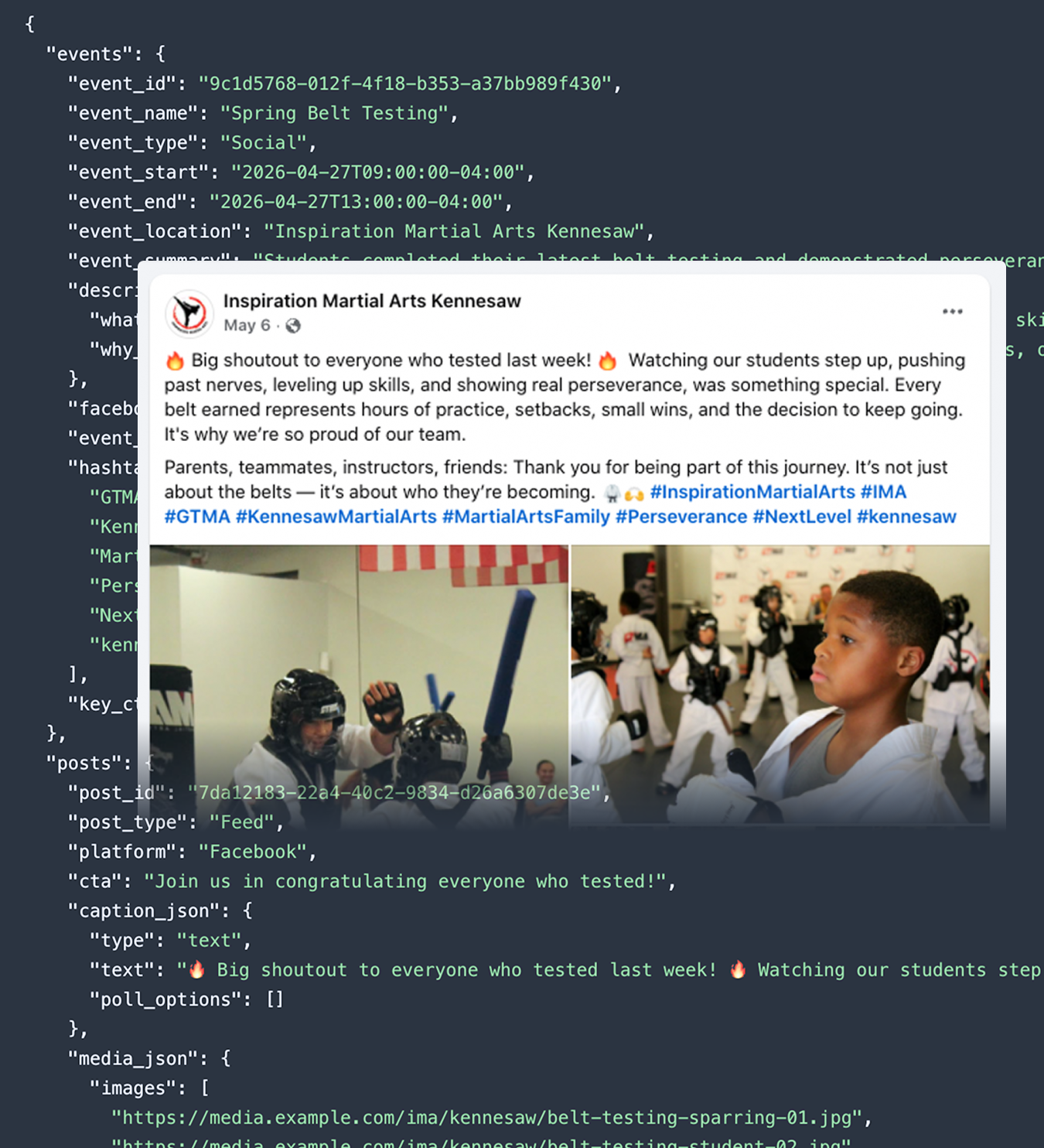
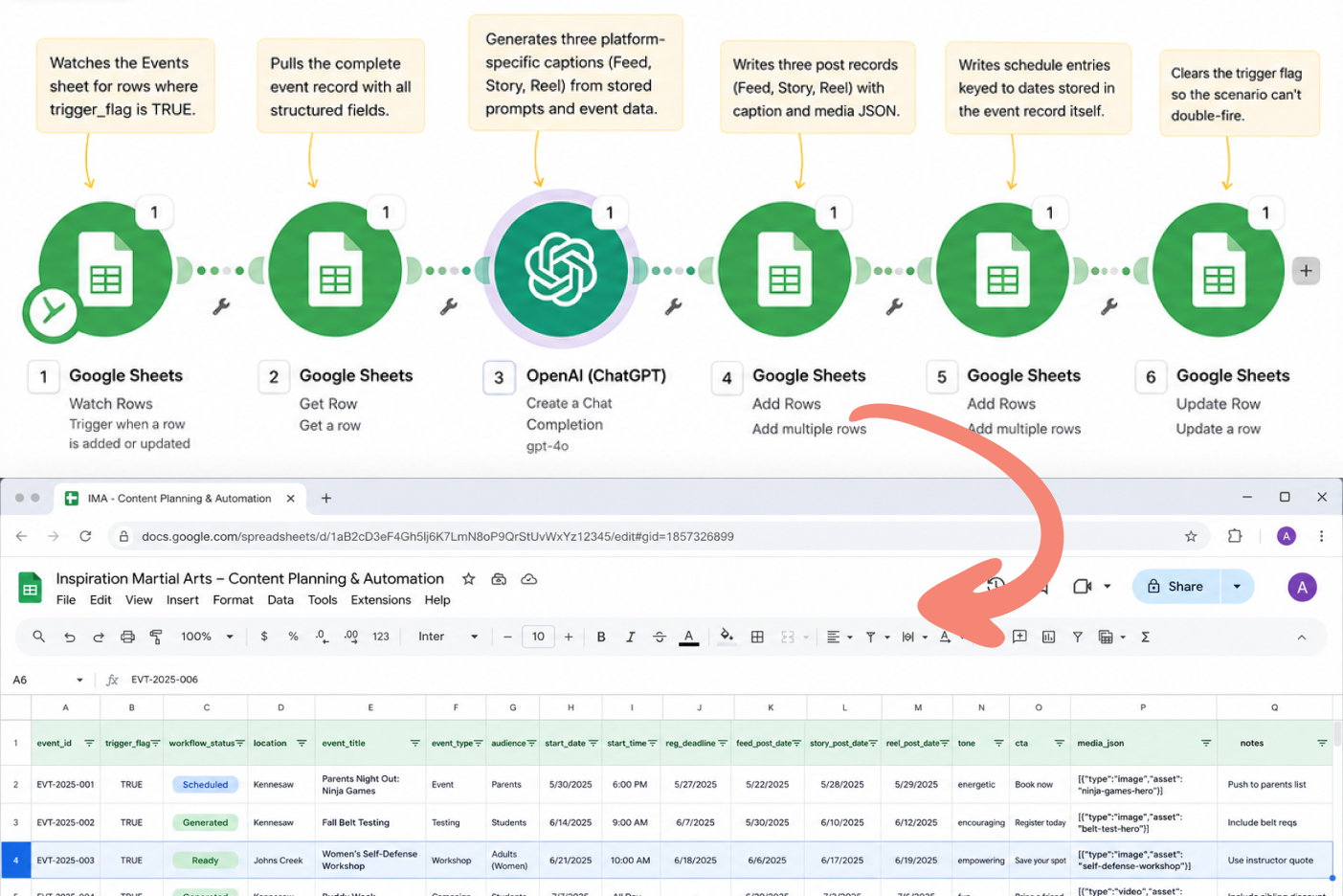
The role of social media channels expanded from an announcement board into public proof of the school's expertise and culture. I then rebuilt production as a data pipeline, with every event and recurring post type becoming a structured record that automation read on scheduled triggers to draft captions, fill branded templates, and schedule across the full eight-week training cycle in one pass. Staff stopped writing posts and started approving them.
A "congratulations" post on Reels platforms in the new standardized brand, showcasing individual students to promote sharing and to cultivate a customer-focused culture for retention.
I built a digital front door that qualified and routed interest
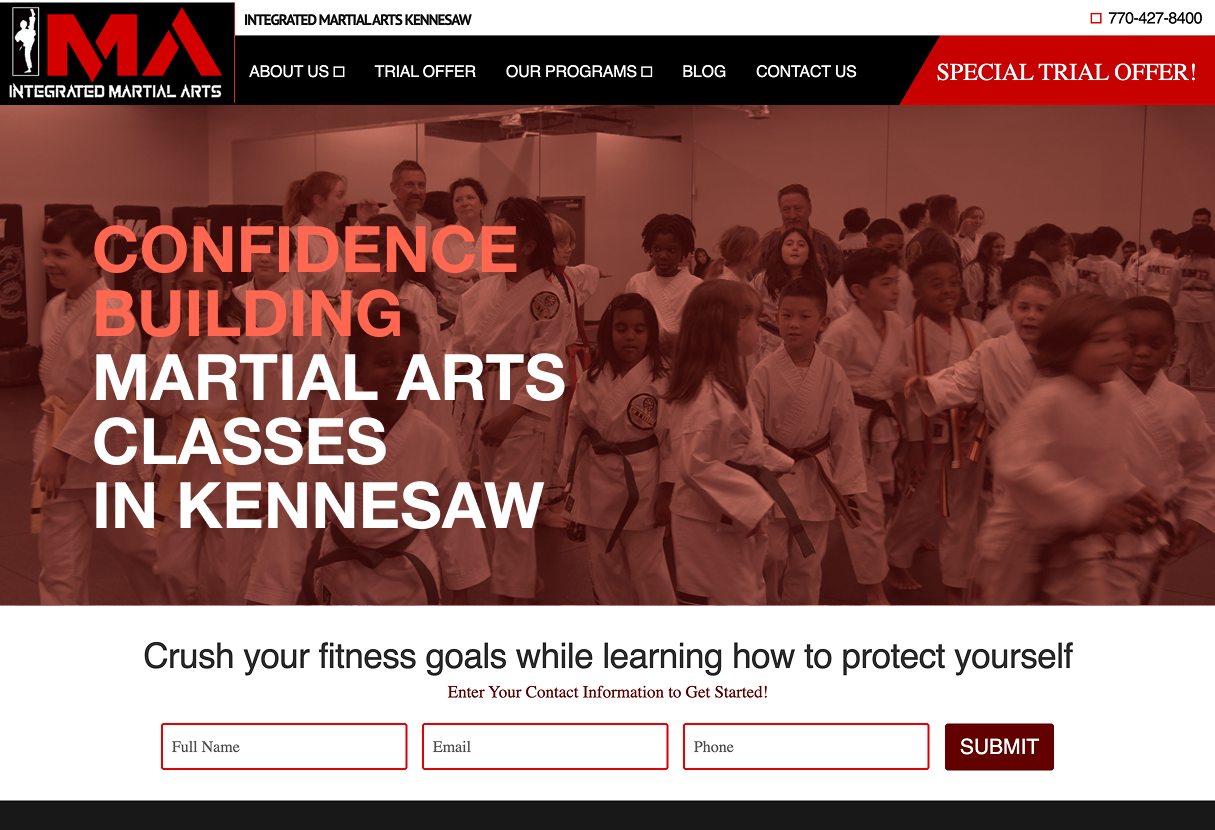
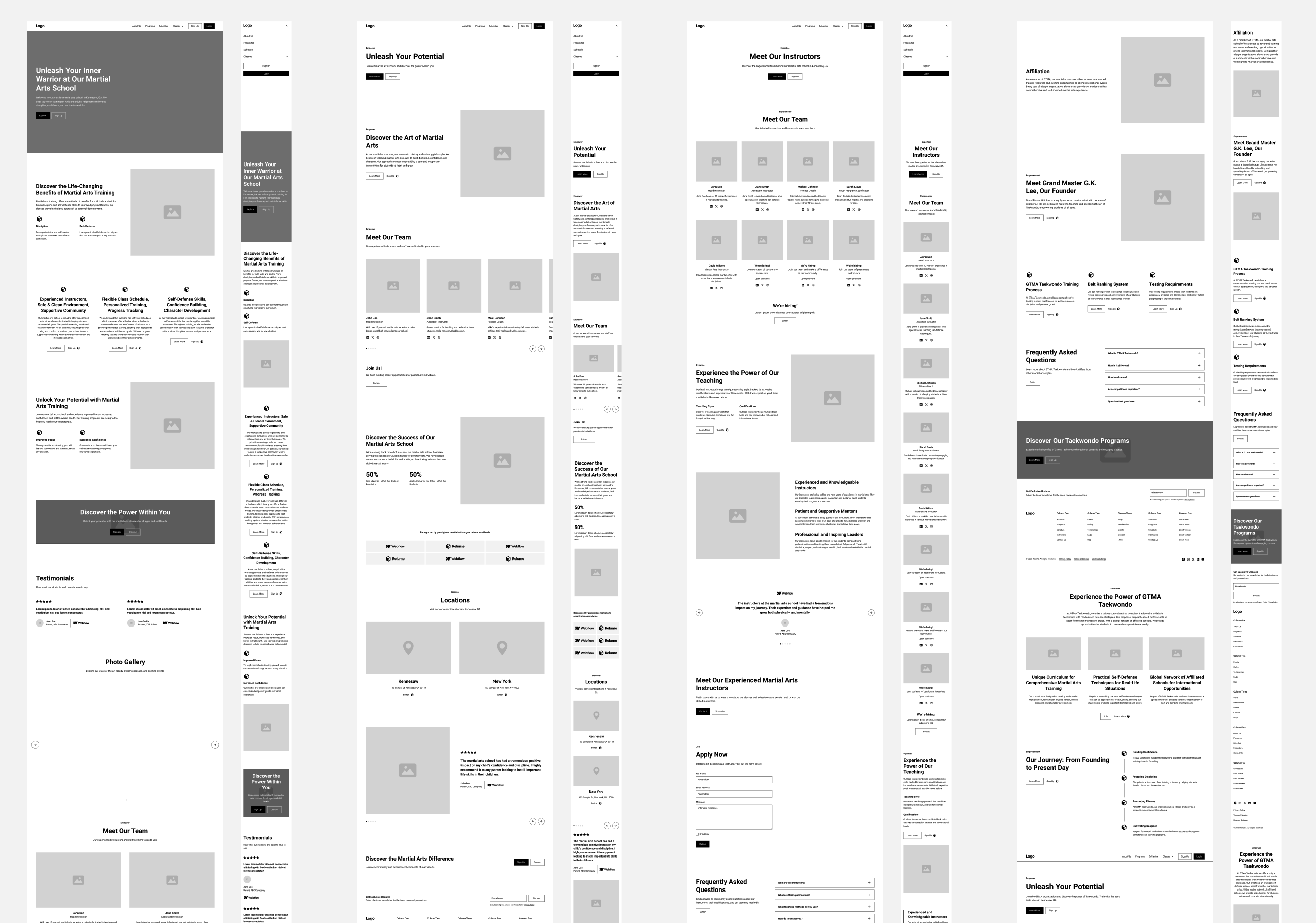
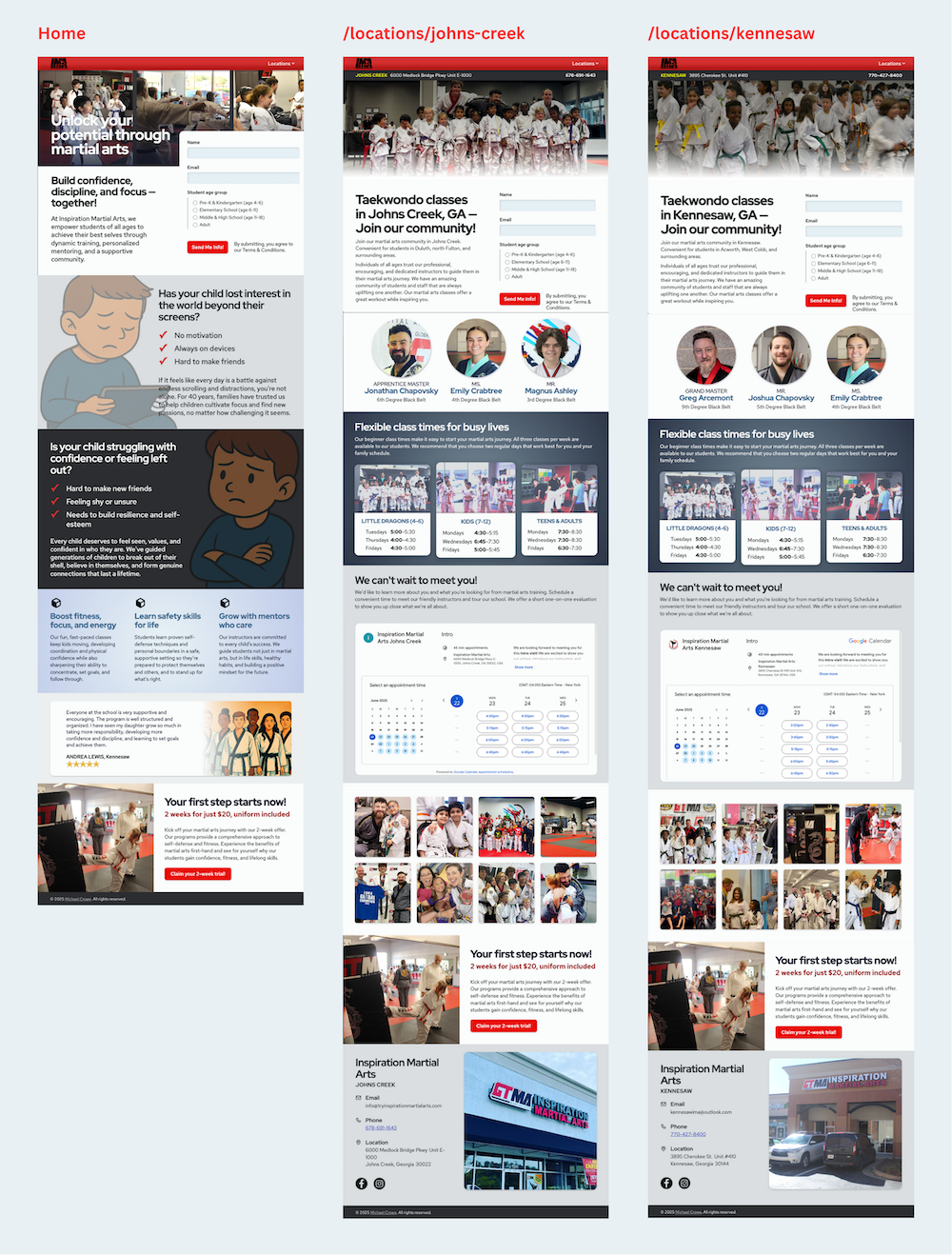
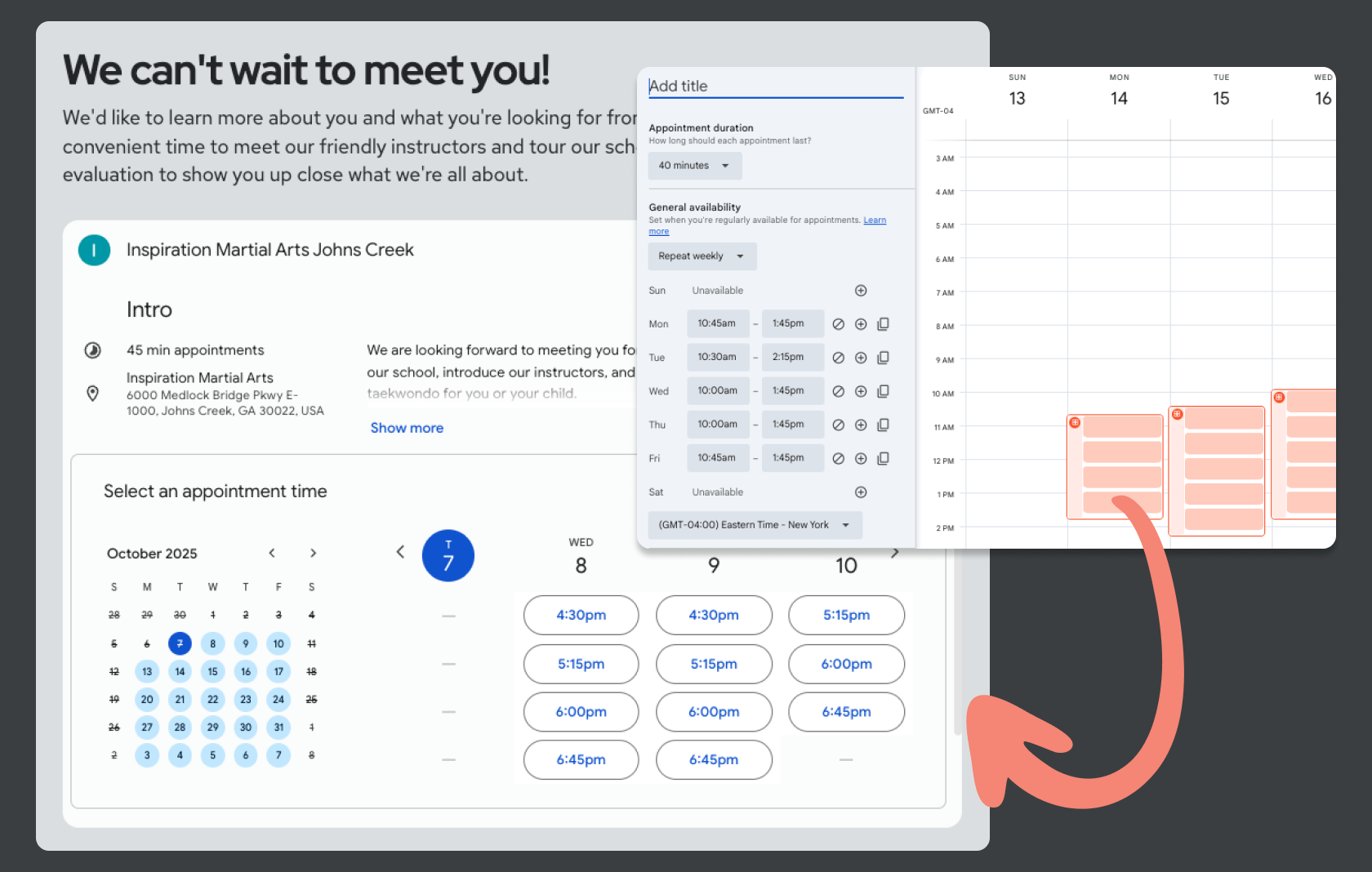
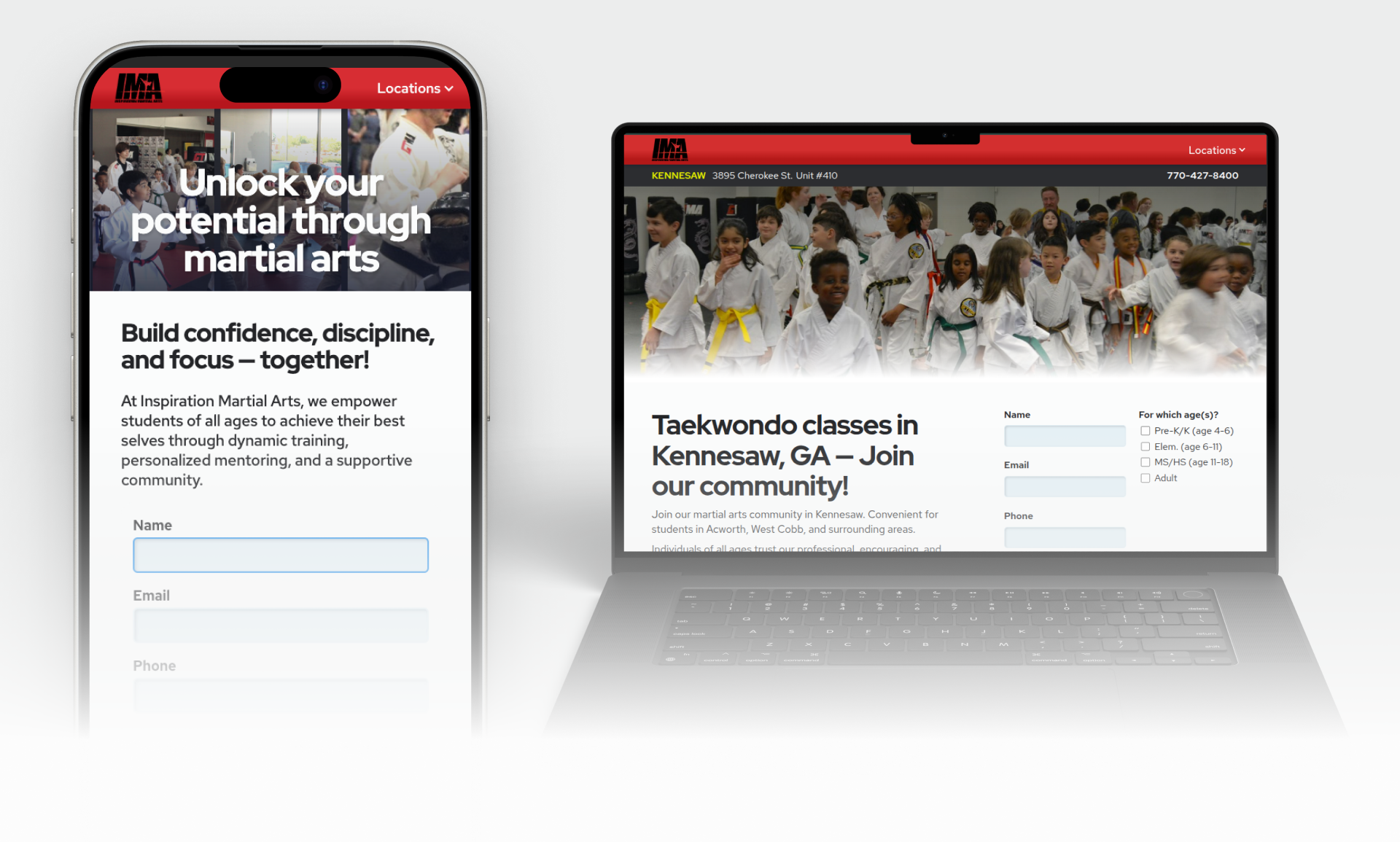
The rebuild started with triage. I caught a lapsed vendor account that had put the site at risk of going dark mid-transition, then phased the Webflow launch like a product release, publishing Home and the flagship location first, then deeper program pages in planned rounds. Native forms captured program, location, and referring page; an embedded calendar booked trials directly; CMS templates and structured metadata carried local search and expansion.
I guided prospects through an 8-week enrollment journey
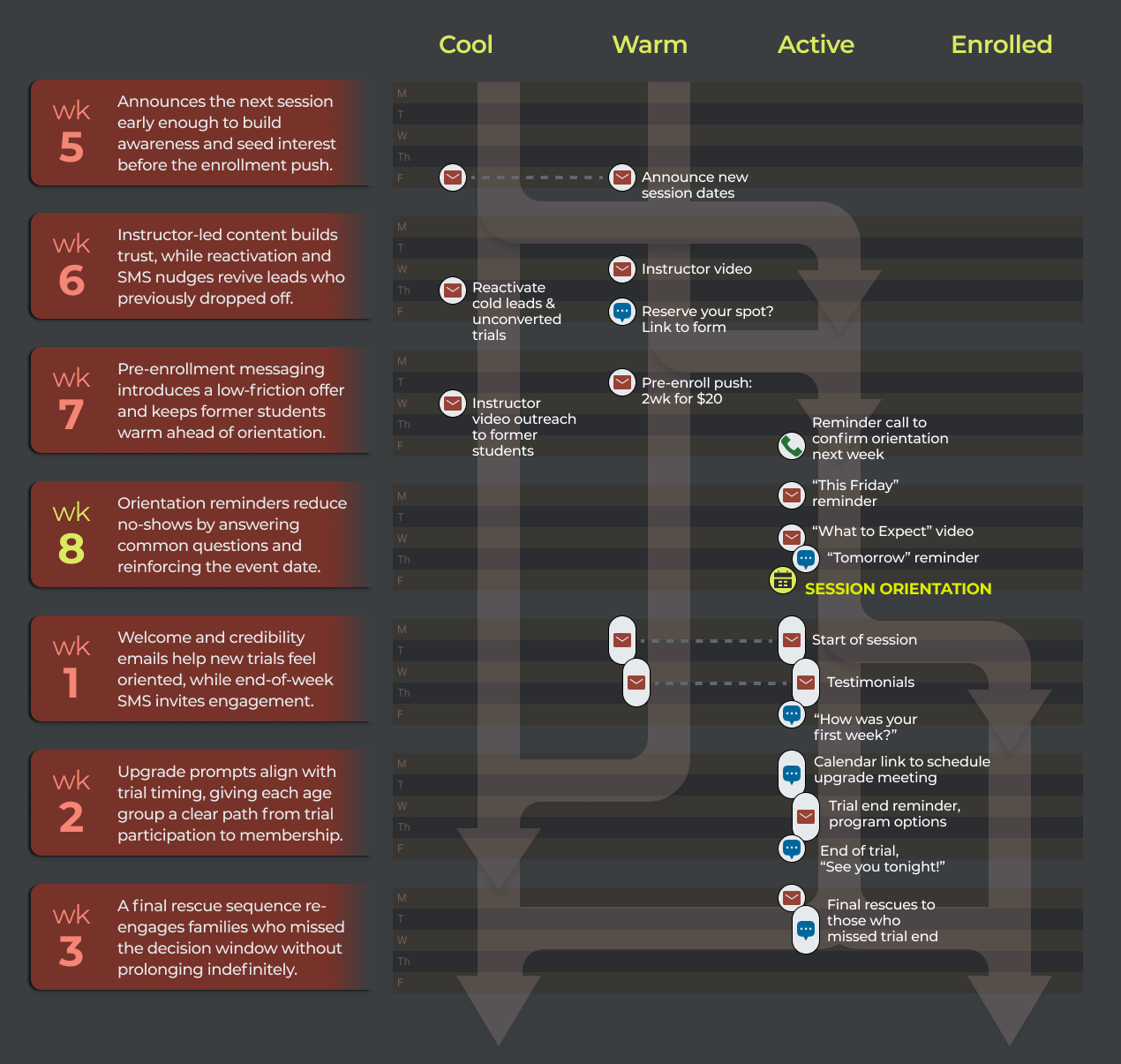
I mapped inquiry, trial, rescue, and reactivation paths across email, SMS, video, and staff calls, sequenced to behavior rather than a generic drip. The nurture journey and the content pipeline ran on a unified architecture so staff learned one set-and-forget mental model and new locations inherited one system. Automation handled the calendar; people handled the moments that needed to feel real.
The content for the What To Expect video was designed to directly address the top parent anxieties acting as a crucial step in the user experience journey to reduce friction and build trust prior to the first visit.

Delivery
I phased delivery around business continuity and staff capacity
I launched the highest-priority pages first, then expanded the website, content system, and enrollment journey in planned rounds. I introduced workflows gradually so adoption could keep pace. Paper-first versions helped staff learn the process before automation removed repetitive work, while monthly reporting informed the next priorities.

I worked as an embedded partner during a sensitive transition
Leadership set business priorities and approved launch scope. Staff and instructors worked inside the new processes. Students and families supplied the real culture and recurring questions behind the content. My role covered the connective tissue across journey design, UX/UI, Webflow, CMS architecture, social strategy, nurture, SEO, documentation, photography, and video.
Validation
I refined the journey through search data, lead behavior, and staff feedback
Though emotional needs were inferred from repeated questions and sales conversations rather than structured qualitative research, validation ran on operational evidence:
- Front-desk observation
- Recurring family questions
- Form and scheduler QA
- Lead-stage comparisons across eight-week cycles
- Search Console performance
- Staff adoption checked before and after automation
IMPACT
I increased qualified demand while reducing the work to support it
Though tracking could not follow prospects to conversion, mid-funnel data show qualified leads reaching Intro doubled across comparable 8-week periods. The CMS scaled from two locations to three without structural rework. Families gained clearer information and easier scheduling. Staff gained a more predictable follow-up process, while the business improved visibility and lead capture without increasing advertising spend.

Laci
João
Ron
REFLECTION
Customer experience is determined between visible touchpoints
The website, social channels, scheduler, front desk, instructors, and follow-up communications formed one seamless service from the family’s perspective. The strongest improvements came from designing those connections together while preserving the authentic relationships and community trust that had sustained the school for decades.
What I'd do differently next time...
With greater operational authority, I would strengthen the systems surrounding the experience so execution remained as consistent as the design itself.
- Protect shared integrations with clearer permissions.
- Require brand adoption across every location.
- Track leads through conversion, not submission.
- Interview prospects across enrollment outcomes.
- Measure individual lifecycle touchpoints.
The next iteration would preserve the same service-design model while adding the governance and accountability needed to distinguish marketing performance from operational conversion.