Across two tenures, I led three generations of the company website from vendor-managed WordPress to Webflow and an internally maintained platform. Each rebuild removed deeper content, security, architecture, and ownership risks.


Medical Asset Management sold specialized hospital software, but its corporate website repeatedly fell behind the product it represented. Across six years, I led three successive rebuilds as my role grew from content and design lead to platform strategist, product manager, and front-end contributor. Each generation retired a deeper risk than the last:
- The first repaired content and brand fragmentation
- The second recovered from a security failure and cut vendor dependency
- The third brought architecture, code, and routine ownership in-house

Problem
The website evolved through vendors, episodes, and competing priorities
The company's public presence accumulated across changing products, subsidiary brands, and rotating vendors while application development rightfully consumed internal attention. Each vendor engagement produced a website; none produced a way to maintain one. Routine content and design drifted away from the people who actually understood the products, so the site changed in episodes rather than through anyone's durable responsibility.
Professional brands must make a professional impression
Hospital buyers researching the company met dated visuals, fragmented navigation, redundant filler copy, defunct subsidiary references, and incomplete product pages. Eventually, a WordPress exploit took the entire site and its admin interface offline. For a business selling reliability to clinical departments, the gap between product maturity and web presence had become a credibility problem, not a cosmetic one.

insight
Why did every redesign eventually reproduce similar problems?
I tracked content, interface, development, security, and maintenance issues in Jira; reviewed analytics and search performance; and interviewed executives, sales staff, and product experts. A pattern emerges across generations of behavioral data and internal domain evidence: each redesign fixates on what visitors see without addressing how we author, secure, review, or maintain it.
The surface decayed because the operating model was the real product
A new theme on the same operating model would eventually fail the same way. Durability meant improving the conditions underneath the interface—content structure, secure infrastructure, publishing ownership, and review—so each generation left behind more capability than it inherited.
Jobs to be done: Hospital decision-makers need the website to explain the products clearly and reinforce confidence in the company behind them before they'll shortlist a vendor.

Andrew

Claudia

Dan
decision
Each time: Keep patching, start from scratch, or retire the causes?
Successive versions kept exposing the same categories of problems: fragmented content, vendor dependency, weak ownership, and technical constraints. I considered three approaches:
- Continue correcting the existing site — Make targeted design, content, SEO, and maintenance improvements without changing the operating model.
- Replace the platform when problems became severe — Treat each rebuild as a discrete project optimized for the immediate need.
- Use each rebuild to retire deeper platform risk — Progressively improve content, security, ownership, architecture, governance, and extensibility.
Design tension: The website needed to become credible and current without the organization acquiring a web team it didn't have — or repeating a redesign it would only outgrow again.
I chose progressive modernization and made each rebuild earn the next
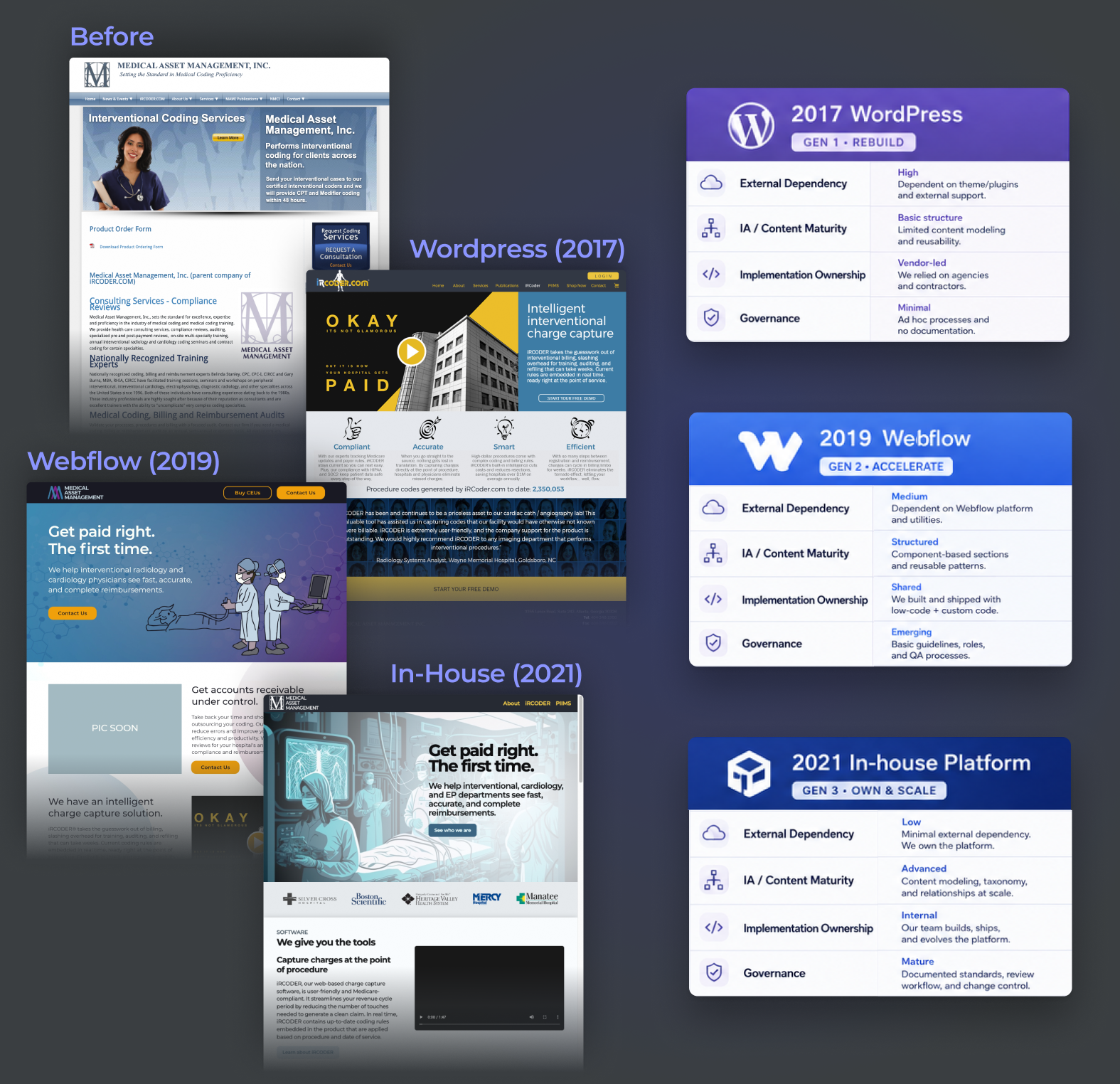
The first generation repaired content and brand fragmentation, the second removed security exposure and vendor dependency, and the third established reusable structures and moved ownership and code in-house. This demanded repeated investment and stakeholder persuasion, but each generation removed a class of risk rather than painting over it.

Gallery
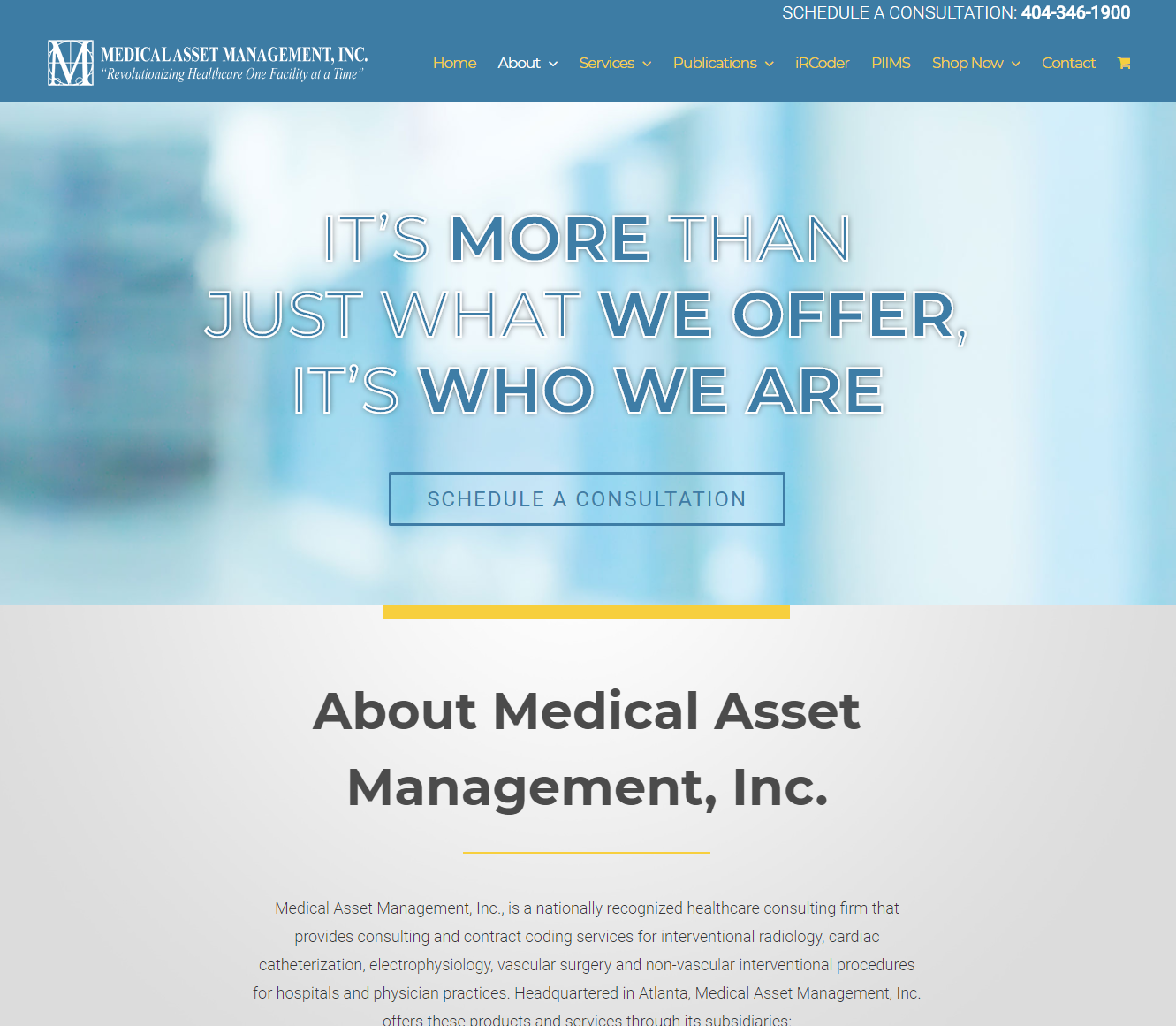
I repaired the content, architecture, and brand
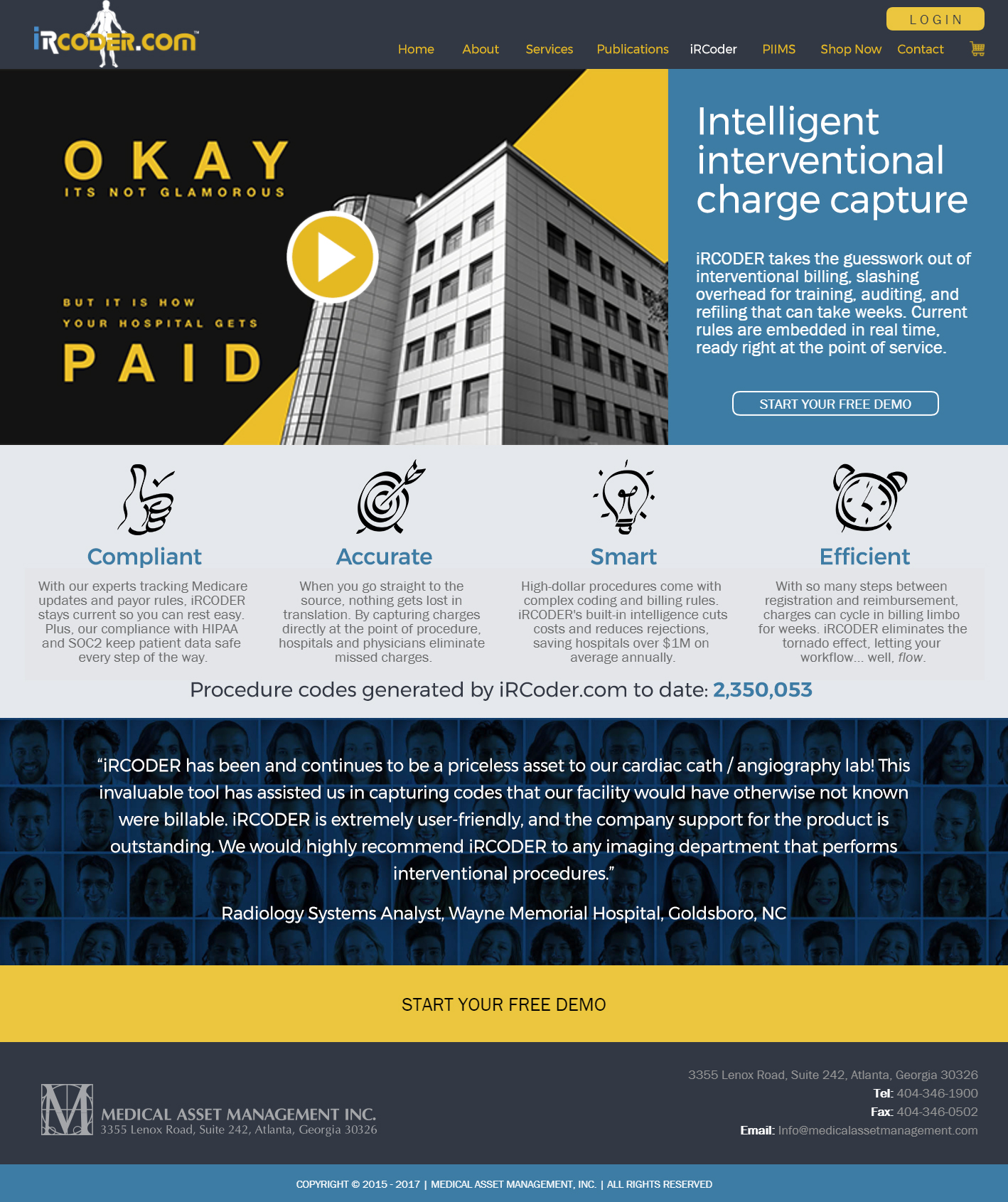
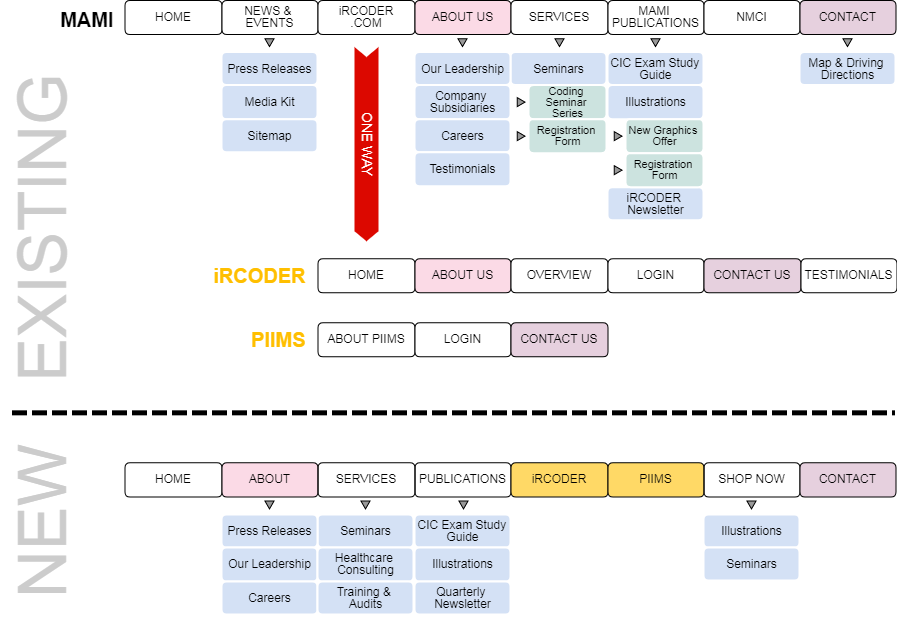
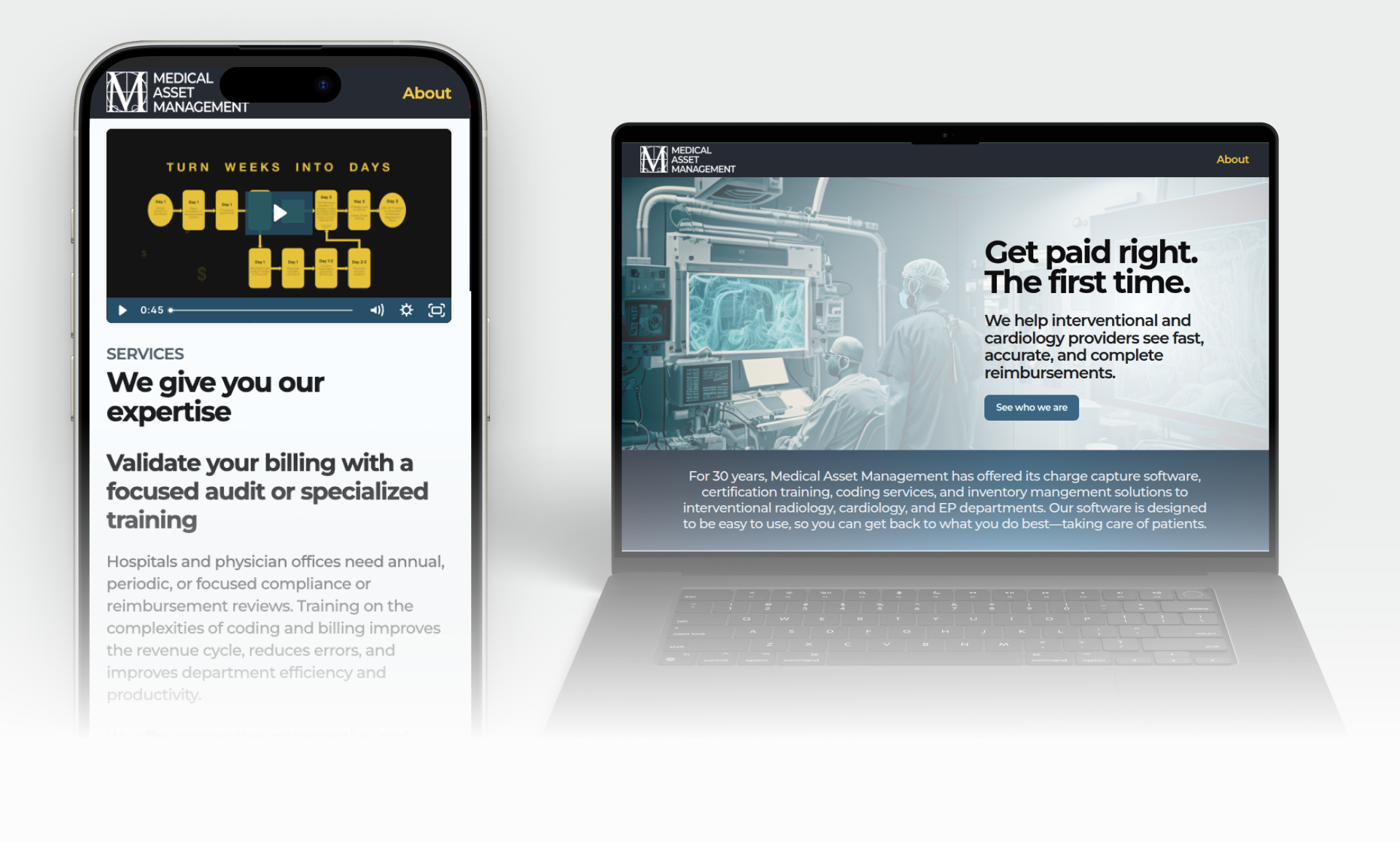
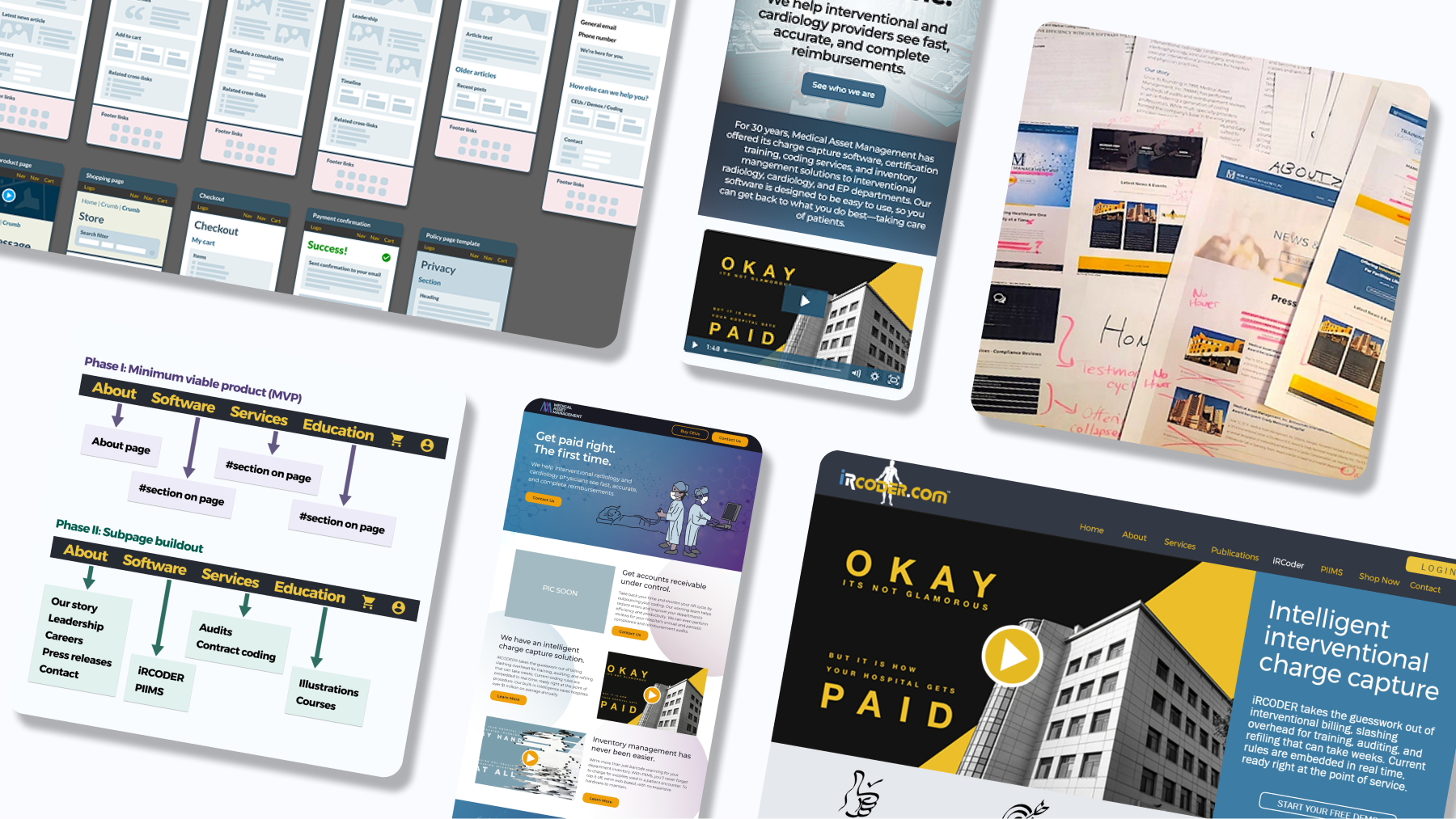
The vendor-led redesign assumed existing material could move into a new theme, but defunct subsidiaries sat in navigation, copy was duplicated as filler, and parent-company colors clashed with product identities. I consolidated and rewrote the content, restructured the information architecture, wireframed the missing pages, and unified the company and its products under one coherent identity.


I recovered from a security failure, removing vendor dependency
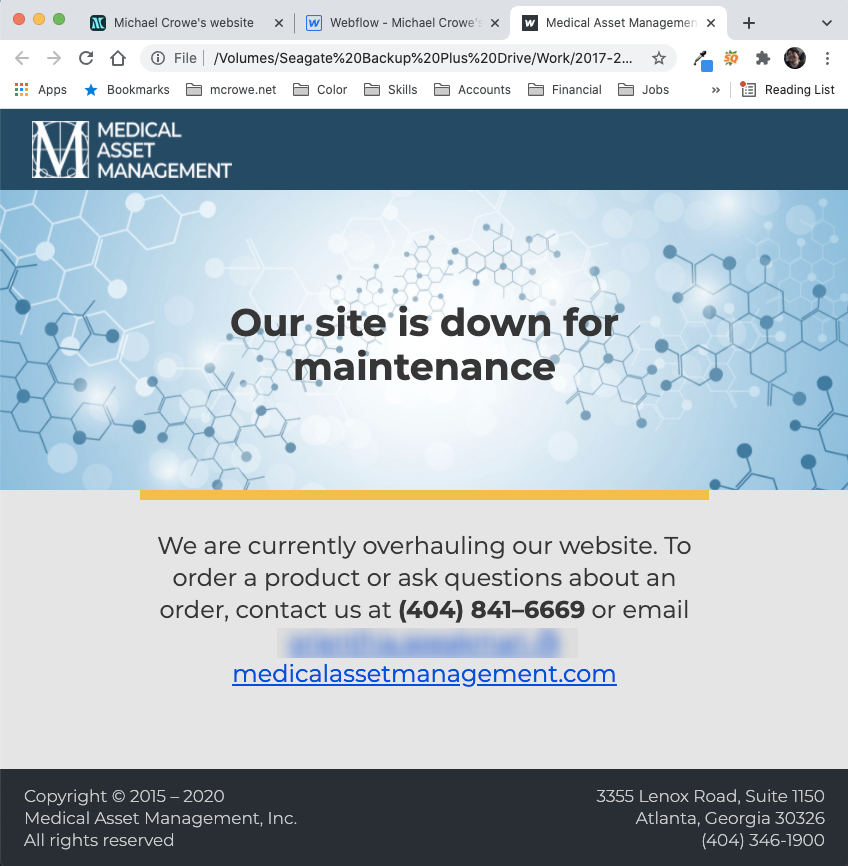
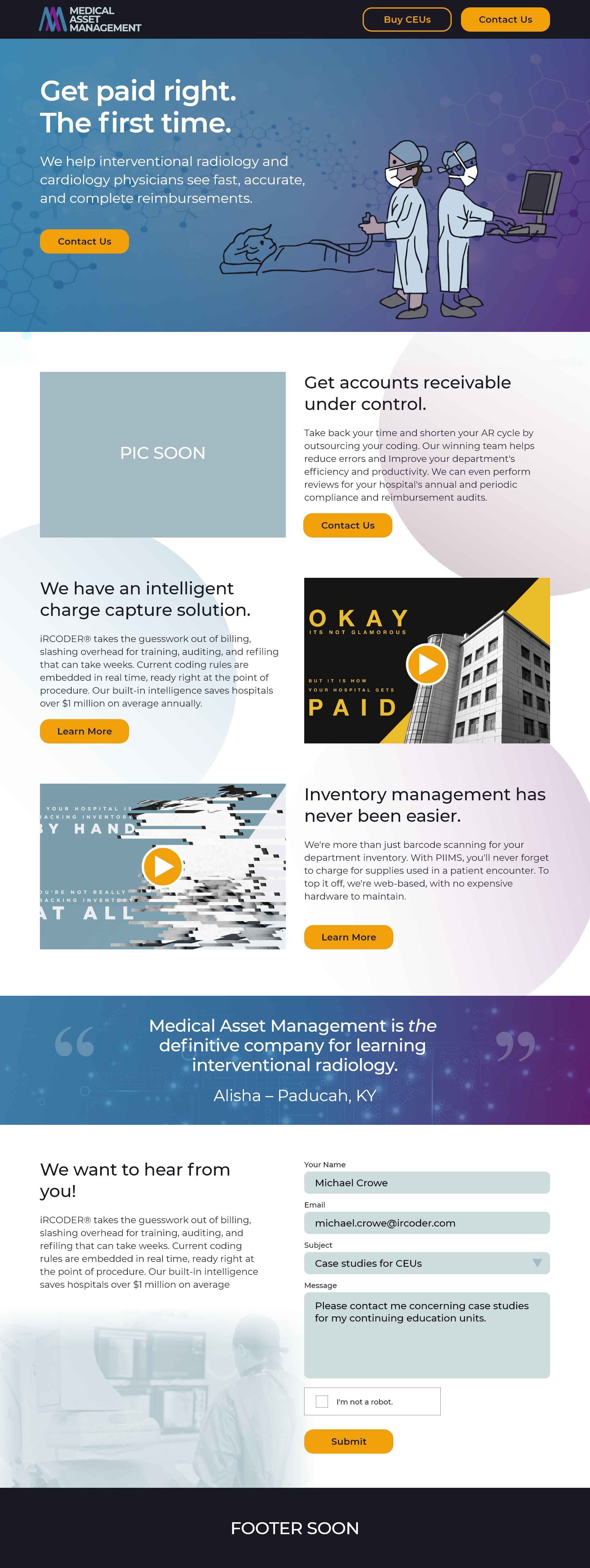
When a WordPress exploit took the site and its admin interface offline, I published a branded caretaker page by end of day and rebuilt a viable Webflow site within a week. I consolidated thin pages into stronger sections, simplified navigation, and built an internal style-system page, giving a non-technical team safe control of routine content for the first time.

I brought platform architecture and implementation in-house
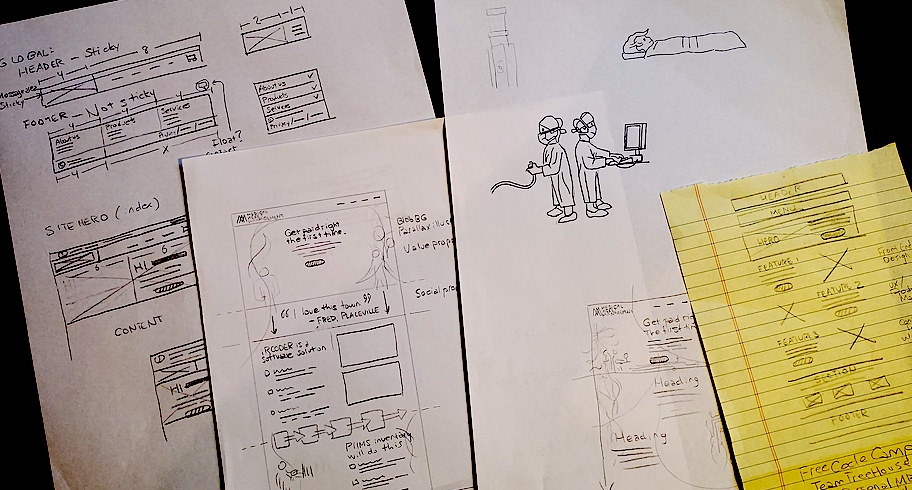
The third generation needed durable internal architecture. I proposed category-based IA, reusable component logic, structured data, and annotated page templates that connected visible page regions to implementable structure, while box-model wireframes tied design directly to the classes developers would write. My role expanded from product-managing the build to contributing front-end code through Git.


I extended the platform into education and commerce
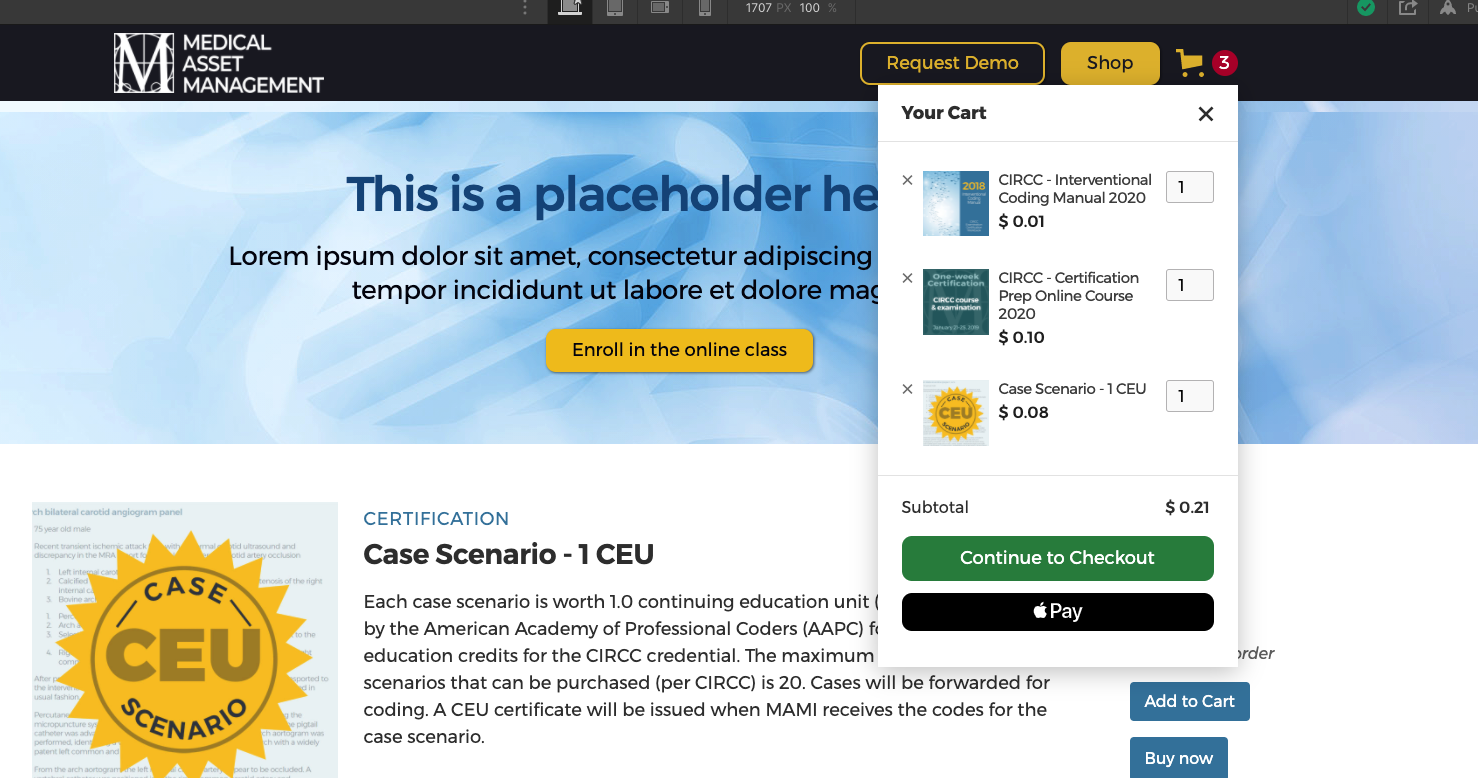
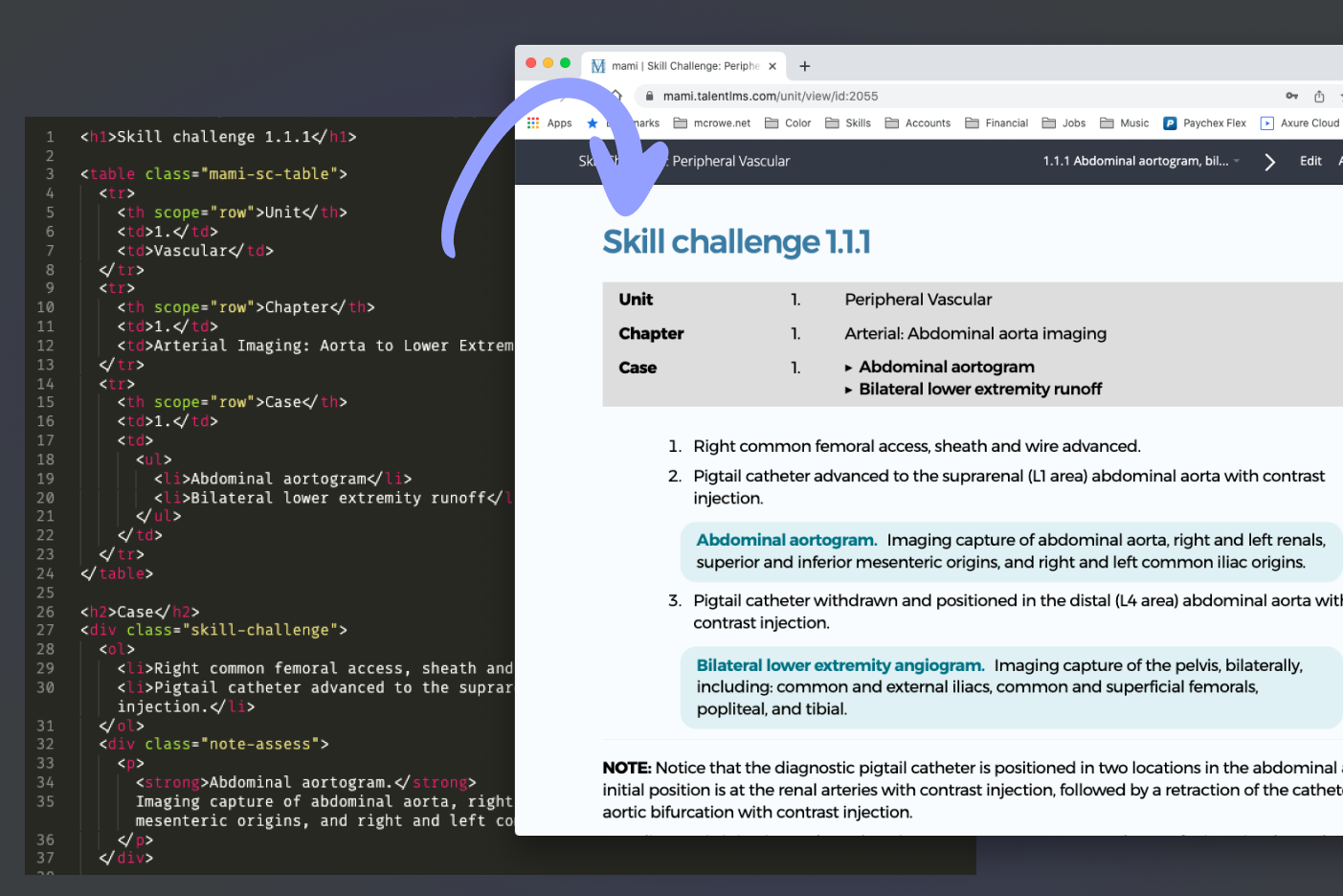
COVID exposed the cost of flying trainers to hospitals with printed material. Rather than build a bespoke learning application, I integrated a purpose-built LMS that subject-matter experts could maintain, authored portable HTML lesson content, connected purchases to course registration, and simplified the proposed checkout flow, extending a marketing site into new revenue centers.



Delivery
I delivered each generation according to the organization’s available capacity
- The WordPress generation required directing vendor work
- The Webflow generation required same-day emergency response and rapid solo implementation
- The in-house generation required roadmaps, sprint planning, and front-end contribution through Git.
That final build was deliberately low-dependency, free of frameworks and published through the same AWS channels the team already used to ship the primary app. Nothing required new tooling, which is what let website work flow through the existing review and approval process and receive consistent updates as part of the internal workflow.

My role moved inward as the platform did
Vendors handled early implementation, internal engineers later reviewed architecture and code, and my role evolved from content and design lead, to solo Webflow builder, to product manager and front-end contributor. Owning that continuity meant each generation's lessons carried into the next instead of being lost with every redesign: the throughline no vendor could have provided.

Validation
I integrated website acceptance into the company’s existing review process
I routed website designs and implementations through the same Jira-driven functional review and code review used for the flagship application, placing them in front of developers, the product manager, SMEs, and approving executives before release. Validation also included analytics and search performance, content QA, the security recovery itself, and end-to-end commerce testing.

IMPACT
I improved search visibility while lowering long-term operating cost
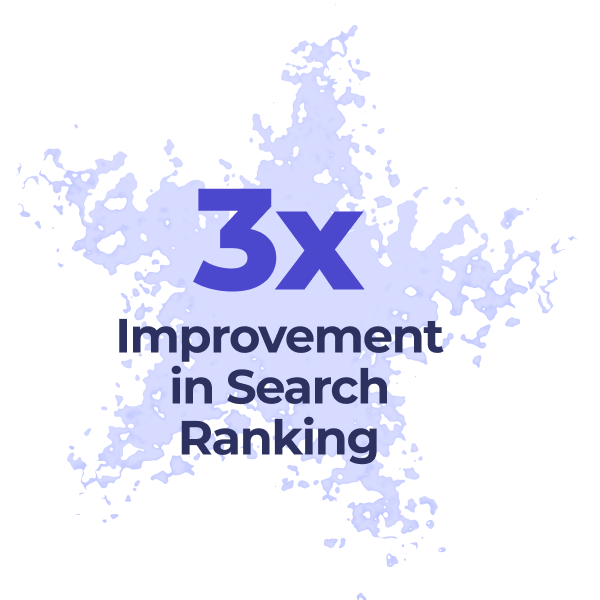
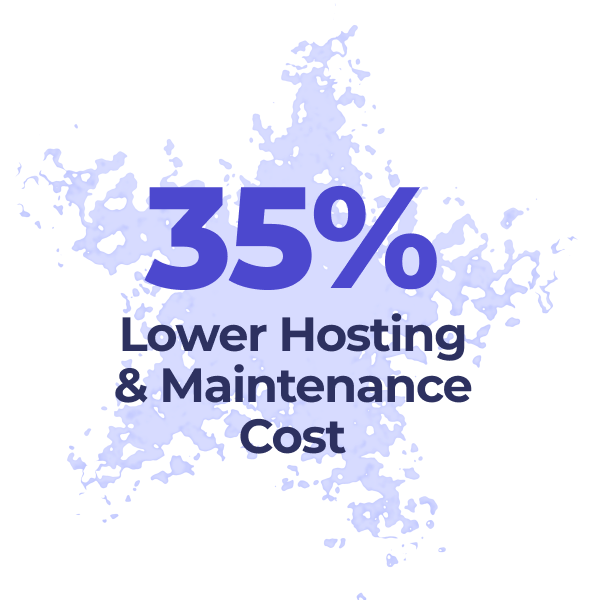
Each rebuild ultimately left behind more internal capability than it inherited. Average position across tracked search terms improved threefold across comparable 90-day periods, while hosting, subscriptions, and routine external maintenance costs fell 35%. Other gains were operational:
- Internal contributors gained routine publishing control
- Developers were removed from ordinary content updates
- The platform gained capacity for education and commerce

Andrew
Claudia
Dan
REFLECTION
Iteration turned an inherited website into a record of evolving capability
Each generation exposed a deeper problem and required a broader skill set, from content and visual design through information architecture, platform strategy, product management, front-end development, education, and commerce. The project reinforced that platform maturity depends as much on ownership and governance as it does on the quality of the interface.
What I'd do differently next time...
With hindsight, I would establish the long-term platform model earlier and push more of the unfinished commercial and educational capabilities into production.
- Establish content governance from the start.
- Launch the online store.
- Evaluate an in-house Academy sooner.
- Research hospital buyers directly.
- Standardize success metrics across rebuilds.
The larger lesson is that rebuilding the interface is only durable when the organization simultaneously improves how the platform is owned, measured, extended, and maintained.