I made client training modular, fast, and flexible by taking our print publications and phone sessions digital.

See Figma slideshow
⚠  This case study is still under construction
Position
Technical Writing Manager
Company
Nuesoft Technologies
Description
Practice management, scheduling, billing, and EMR SaaS for private medical practices
AV
Writing
Process
Service
Product
UX
Graphics

New medical practices spent their first month navigating repeated forms, paper instructions, and five scheduled training calls before they could confidently use NueMD’s cloud software. As Technical Writing Manager, I redesigned that fragmented experience as one coordinated service—consolidating intake, securing executive support for a learning platform, and leading the conversion to a self-paced digital curriculum.

[HERO ASSET — RECOMMENDED: Create a paper-to-digital comparison. On the left, show the physical GO!Pak, printed training material, or representative paper forms. On the right, show the LMS curriculum, video playlist, and conditional learning paths. Connect them with a simple journey arrow: Paper and scheduled calls → Self-serve digital onboarding.]

[ALTERNATE HERO: Use the existing workflow diagram if it clearly communicates the new service. Redraw it in the current portfolio’s visual language rather than publishing the original artifact without context.]

[ASSET TASK: Reshoot the physical materials in clean, even lighting if the existing phone photograph looks archival or visually inconsistent with the portfolio.]

Opportunity

⇪ Back to Top | Next ⇨

New clients spent their first month navigating paper, repeated forms, and scheduled training calls

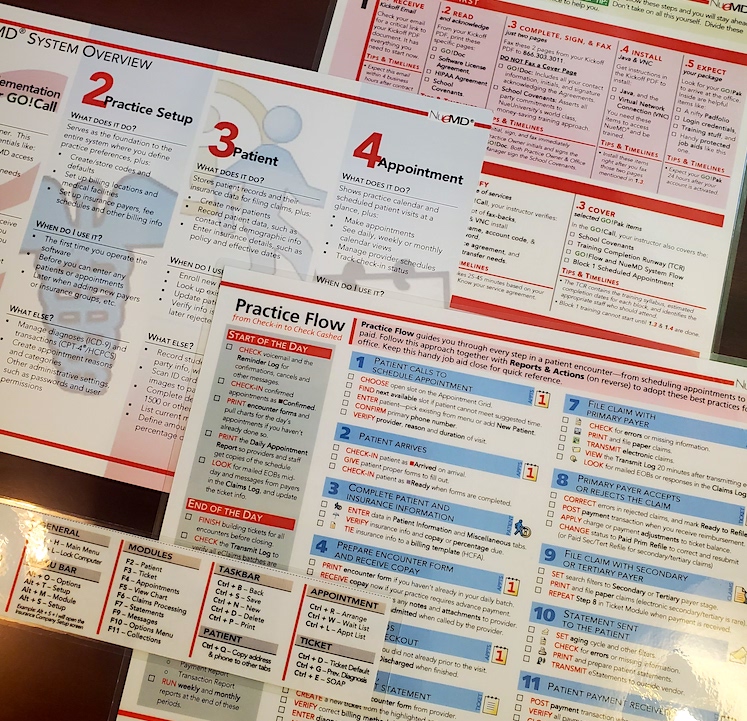
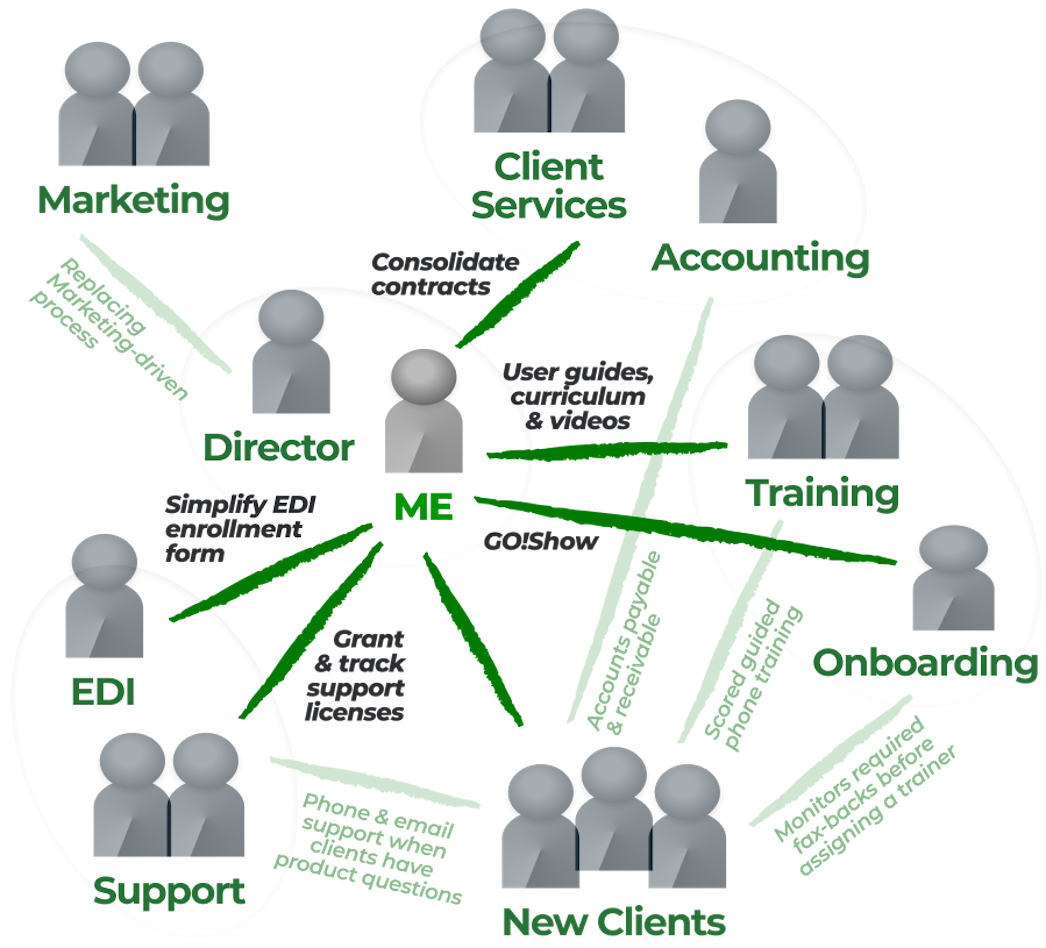
NueMD sold cloud-based practice-management and medical-billing software, but the experience immediately following the sale felt anything but digital. New practices submitted similar information to multiple departments, received a physical onboarding packet, and coordinated five one-on-one phone-training sessions before their staff could work independently.

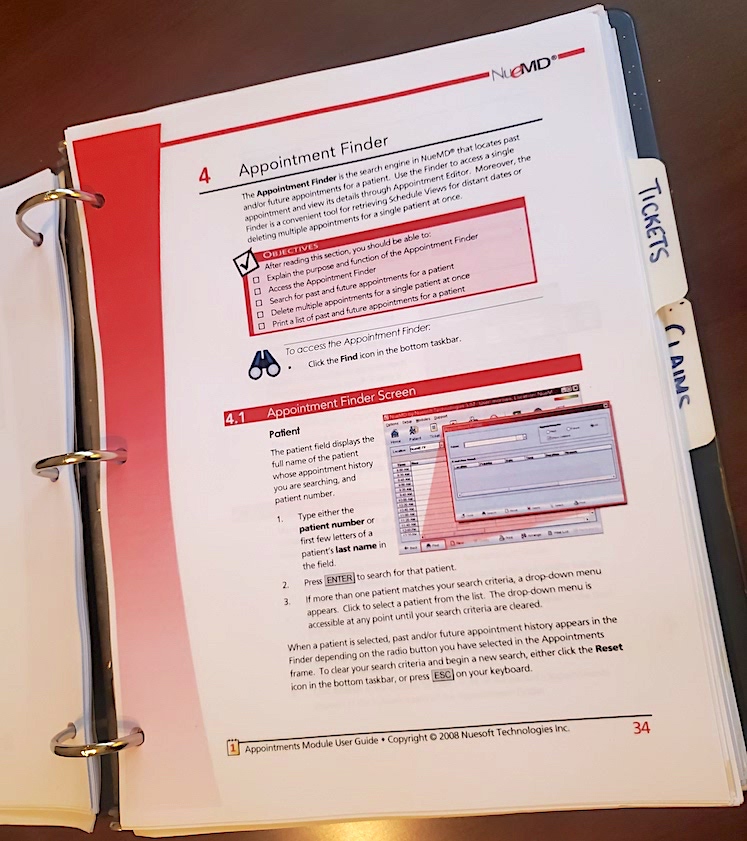
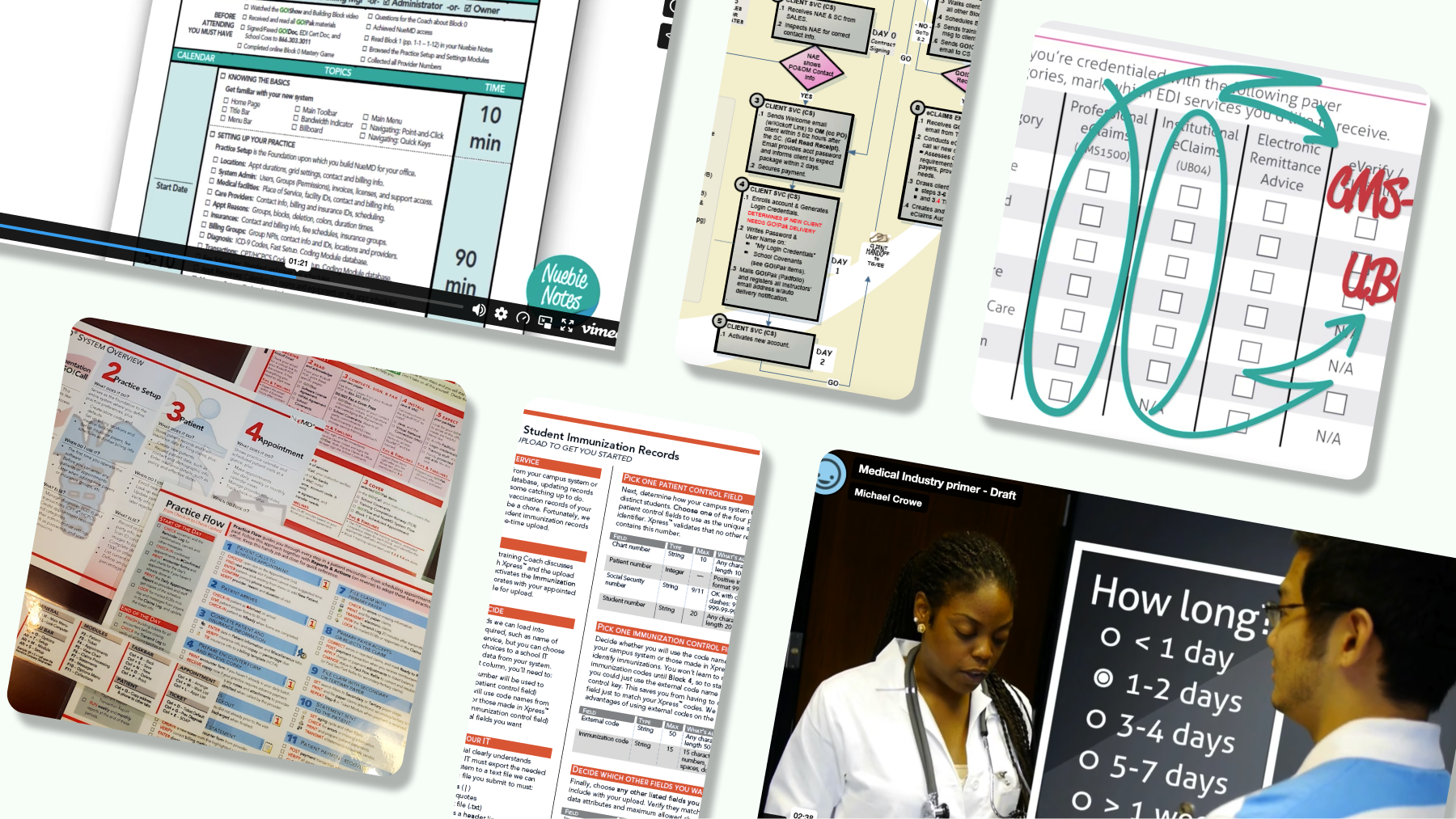
The training program had recently been improved through a printed manual called Nuebie Notes. I had helped create it, and it gave clients a more structured reference than they previously had. But the improvement introduced new operational costs: printing and inventory management, duplicated versions for different client types, and extensive revision work whenever the software changed.

The internal experience was equally fragmented. Training, sales, business development, product, and other departments each owned a portion of onboarding, but no one owned the journey across those boundaries. Staff repeated questions, manually transferred information, scheduled calls, and maintained overlapping materials.

The challenge was to reduce time to competency without sacrificing the human support medical practices needed during a consequential software transition.

[PROBLEM ASSET: Visualize the original month-long journey as a service map. Show the client moving among enrollment forms, departmental handoffs, mailed materials, five scheduled calls, and manual follow-up. Highlight repeated information and calendar dependencies.]

Two years on, it seemed we simply replaced old inefficiencies with new ones
Sometimes, we just made documents for the sake of it.

Evidence & insight

⇪ Back to Top | ⇦ Previous | Next ⇨

Duplicated handoffs and synchronous training—not a lack of documentation—were delaying competency

I inventoried the documents produced by my department and evaluated how each was created, maintained, and used. The audit revealed duplicated materials, overlapping client versions, information that had outlived its purpose, and documents that existed largely because the organization had grown accustomed to producing them.

I then held listening sessions with departments across the company to understand where they encountered friction during the new-client journey. Those conversations exposed repeated data collection, manual handoffs, disconnected departmental processes, and scheduled interactions that could not progress until both the client and an internal employee were available.

The primary external user was typically an office manager or billing employee learning new software while continuing to operate an active medical practice. The primary internal users were trainers and departmental staff whose workdays were repeatedly divided by per-client onboarding tasks.

Job to be done: When a medical practice adopts new billing software, its staff need to learn around an active work schedule so they can begin billing accurately without losing days to appointments and administrative coordination.

The central insight was uncomfortable but valuable: we had been optimizing the materials we produced rather than the outcome clients needed. The month-long experience was not primarily a documentation-quality problem. It was a service-architecture problem created by departmental seams and by static, manually delivered content that changed every time the software changed.

[EVIDENCE ASSET: Use the document-inventory spreadsheet or recreate it as a legible matrix. Group materials by department, audience, duplication, maintenance effort, and recommended action.]

[INSIGHT ASSET: Create a two-column synthesis graphic:

  • What we initially saw: too many documents and training calls
  • What was actually happening: duplicated ownership, calendar dependency, and release-sensitive content

This makes the reframing explicit.]

Research-limitation note: Describe the work as an operational audit, stakeholder listening, content inventory, and service analysis. Do not imply that it was a formal ethnographic or usability-research program if structured client interviews were not conducted.

I presented our pitch to the C-suite

No items found.

Strategic decision

⇪ Back to Top | ⇦ Previous | Next ⇨

I redesigned onboarding as one shared service instead of optimizing each department’s fragment

I considered three possible directions.

The first was to continue improving the existing model through better manuals, tighter scripts, and more efficient scheduled training. That could reduce local friction but would preserve the synchronous bottleneck and ongoing print burden.

The second was to let individual departments adopt separate tools for their own problems. That offered faster departmental wins but risked reinforcing the same boundaries that were already producing repeated work.

The third was to create a shared onboarding and learning system built from granular, reusable content. A common platform could support different audiences and departments without requiring each group to maintain its own near-duplicate version.

I chose the shared-system approach because the cost problem and the client-experience problem had the same underlying cause: duplicated, static content delivered through manual processes. The project could only succeed if departments became co-owners of the solution rather than downstream recipients of a training initiative.

I divided the transformation into two waves. The first consolidated enrollment and onboarding. Its results then created organizational credibility for the larger learning-platform investment.

The tradeoff was that my department gave up sole control of the work. Expanding the system across the company meant accommodating more users, more requirements, and shared decision-making—but it was also what made executive funding and long-term adoption possible.

Solution

⇪ Back to Top | ⇦ Previous | Next ⇨

Gallery 1

I consolidated intake into one client-driven onboarding path

Mapping every department’s interaction with a new client exposed redundant forms, repeated questions, and manual transfers. I worked across departments to reorganize those activities into a more coherent onboarding package called the GO!Pak.

The redesigned process grouped required information, clarified sequencing, and let clients complete more of the journey without waiting for an employee to initiate the next step. Where a scheduled internal conversation existed mainly to transfer standard information, I replaced it with a reusable job aid.

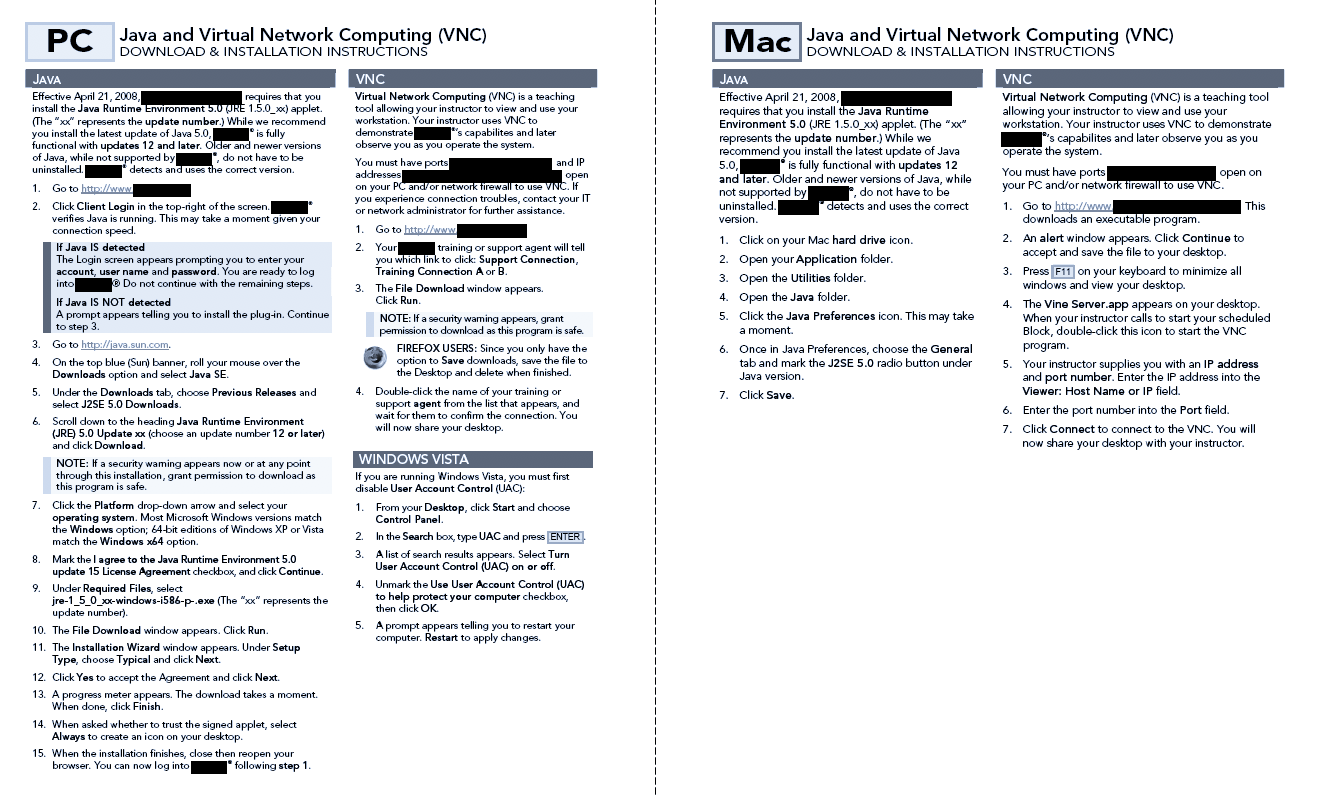
For example, a university health center previously required an IT-to-IT phone call to coordinate setup. A targeted one-sheet guide converted that scheduled dependency into a self-directed task while preserving access to human help when the situation required it.

This first phase reduced the elapsed onboarding process from approximately four weeks to two.

[GALLERY LEAD ASSET: Show a before-and-after onboarding map. The original should contain fragmented forms and departmental handoffs; the revised version should show one sequenced client path.]

[ASSET: University health-center setup guide or comparable one-sheet job aid.]

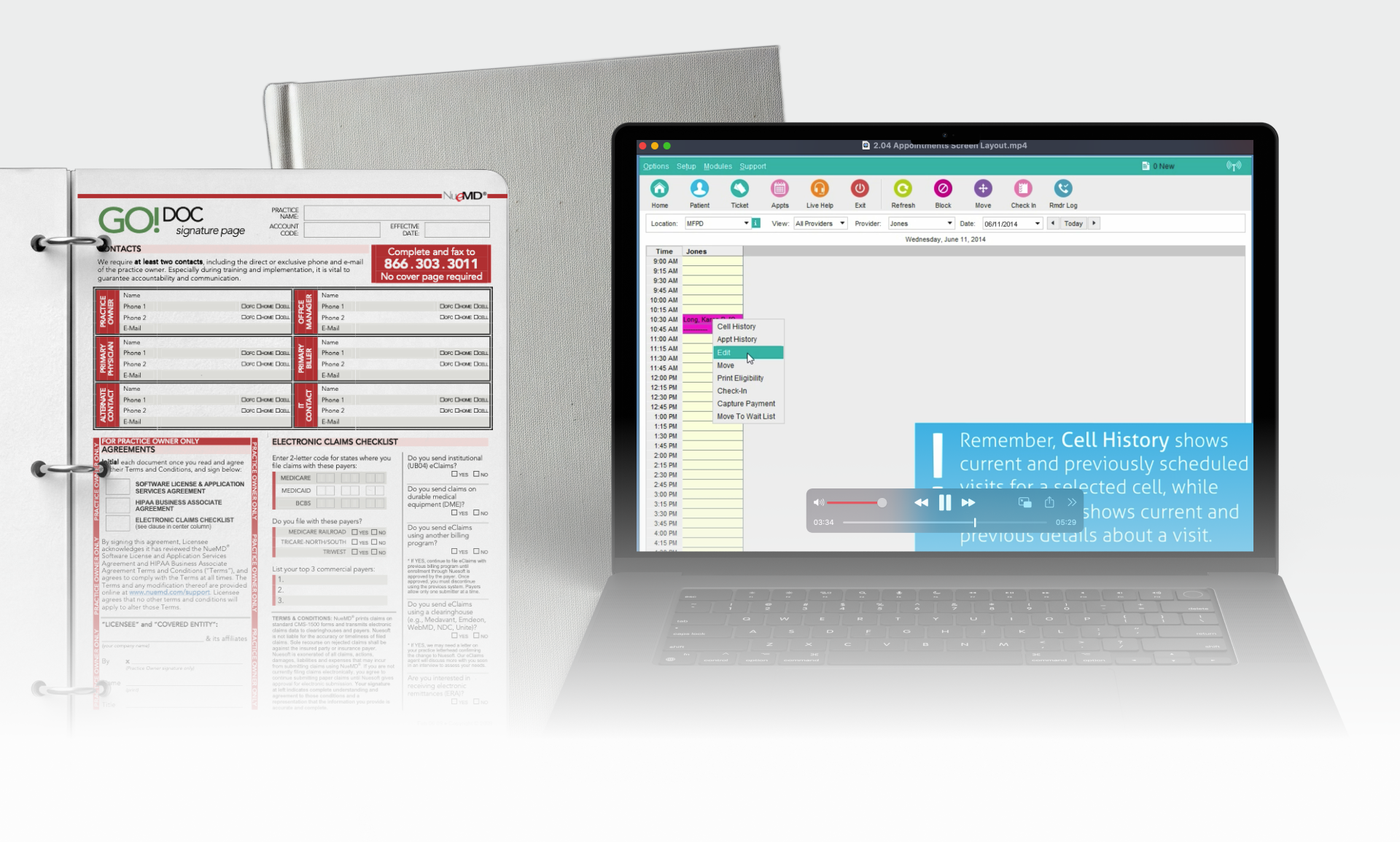
[ASSET: GO!Pak physical materials, preferably reshot.]

[CAPTION: “Consolidating repeated departmental requests into one sequenced package reduced the amount of coordination required from both clients and internal staff.”]

Before this one-sheet job aid, new university health center clients had to schedule a phone call between their IT department and ours to discuss these specs. This document, and later digital instructions, empowered both sides to work independently.
Java & VNC download and installation instructions
Cardstock and laminated tangibles, part of the new client GO!Pak.
Gallery 2

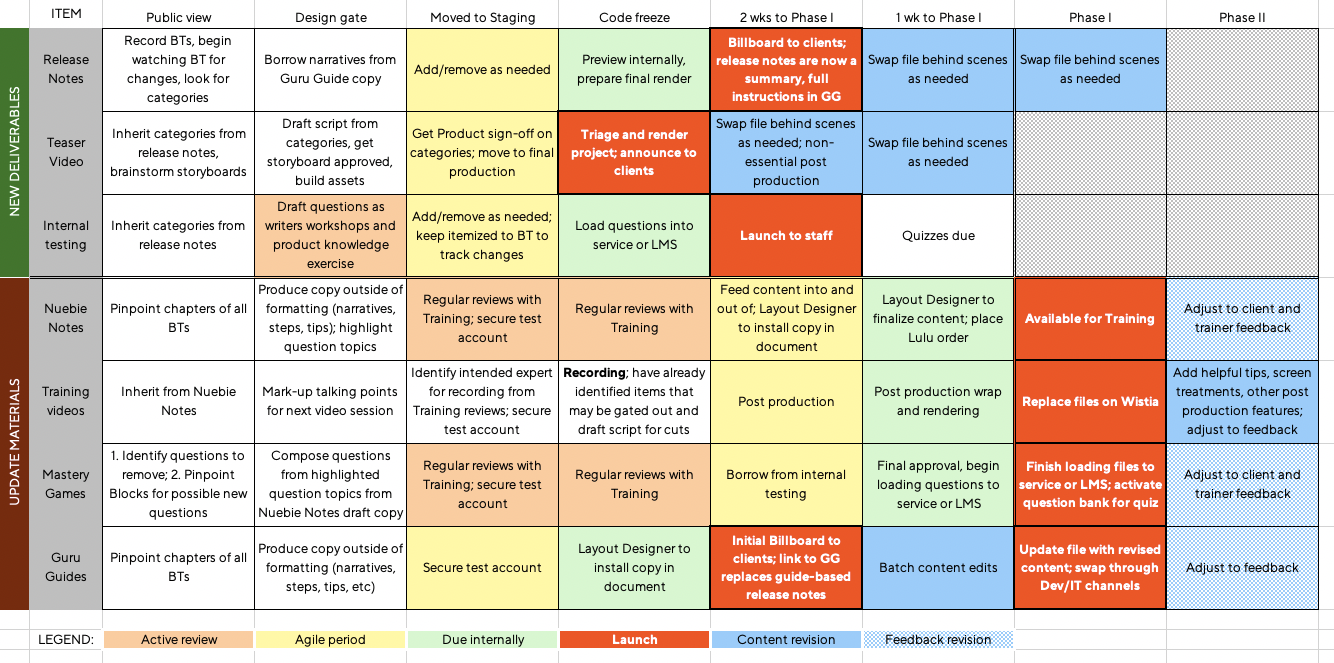
I turned the documentation inventory into an actionable conversion plan

Moving the training program online did not mean uploading every existing document into a new platform. That would have digitized the clutter without improving the experience.

I categorized the complete documentation inventory using four actions:

  • Update materials that remained useful but had become inaccurate.
  • Consolidate overlapping materials into shared assets.
  • Standardize useful content that lacked a consistent structure.
  • Sunset content that no longer justified its maintenance cost.

The framework transformed a large, ambiguous conversion into assignable work. Junior writers could handle straightforward updates and standardized conversions, while senior writers addressed consolidation, information architecture, and high-risk content.

It also forced the team to justify each asset according to a current user or operational need rather than preserving it because it had always existed.

[GALLERY LEAD ASSET: Display the categorization spreadsheet at a size where the framework is readable. Reduce or anonymize client-specific information as needed.]

[SECONDARY ASSET: Create a flow diagram showing how an audited document moved through Update, Consolidate, Standardize, or Sunset.]

[OPTIONAL ASSET: Show one example in which several near-duplicate documents became one reusable source asset.]

[CAPTION: “A four-part disposition framework turned the content inventory into a prioritized production plan instead of a one-to-one migration.”]

Improvements

Although the GO!Pak was a significant customer experience (CX) improvement over the previous multi-team implementation process, some new inefficiencies needed fine-tuning.

Separate instructions from forms

While we were so focused on whether we gave the customer sufficient documentation to explain what to do, we neglected to consider whether reading documentation was the best mode of communication in the first place. Coinciding with our department's evolution from Documentation to Media, we started converting our instructions to video. This allowed the GO!Pak's paper forms to stand alone without instructions adding to clutter and confusion.

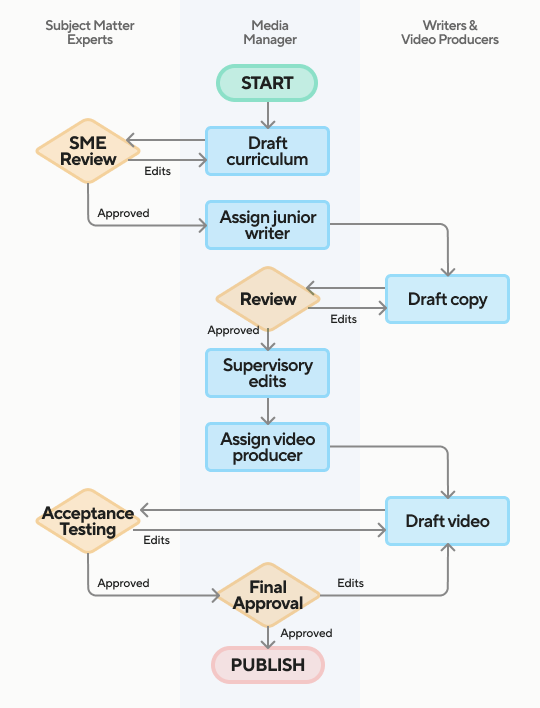
Involving each department as on-screen talent gave them the opportunity to SME review our scripts.

Handoff

Once we had a branded look and tone in place for onboarding, I decided to strike while the iron was hot. The next logical iteration was to bring our print-based training course into the digital age as well.

Using the "playlist" infrastructure and newly-refined production processes, we set to work on writing host scripts and segmenting the training syllabus into crib notes for a voice-talent trainer. Taking an incremental, agile approach, these training blocks and video series were entered into the LMS as they were completed.

The Building Blocks video marks the new client transition from onboarding to training.

Gallery 3

I engineered a repeatable system for producing and maintaining learning content

A self-serve curriculum would only remain useful if the team could update it at the speed of the software. I developed production standards covering script structure, voice, tone, terminology, visual format, review responsibilities, and recording requirements.

We measured readability during editing and used script word count to estimate recording time and production effort. These controls helped managers assign work realistically and gave writers objective signals for simplifying dense explanations.

I also tied learning-content deadlines to the software release cycle. Scripts, recordings, and supporting materials were reviewed against upcoming product changes so the curriculum would not become stale immediately after publication.

The content architecture was granular by design. Rather than maintaining complete parallel courses for every client type, the system reused shared concepts and applied audience-specific logic where workflows diverged.

[GALLERY LEAD ASSET: Show the script or production-standards document beside a completed lesson.]

[ASSET: Readability analysis or editorial metrics. Annotate how the measure informed an edit; do not present the score itself as a business outcome.]

[ASSET: Word-count-to-recording-time planning example.]

[ASSET: Release-calendar diagram connecting product updates, script revisions, SME review, recording, and publication.]

[CAPTION: “Shared standards and release-synchronized deadlines turned video production into a maintainable content operation rather than a one-time conversion project.”]

[ASSET TASK: Rehost any downloadable standards document within your portfolio domain or convert its most important pages into web-native images. Avoid linking to an unstable legacy file.]

I set deadlines to push updates within each release cycle

Workflow

Pitch

adsfadsf

Gallery 4

I launched a self-serve curriculum with human support available on demand

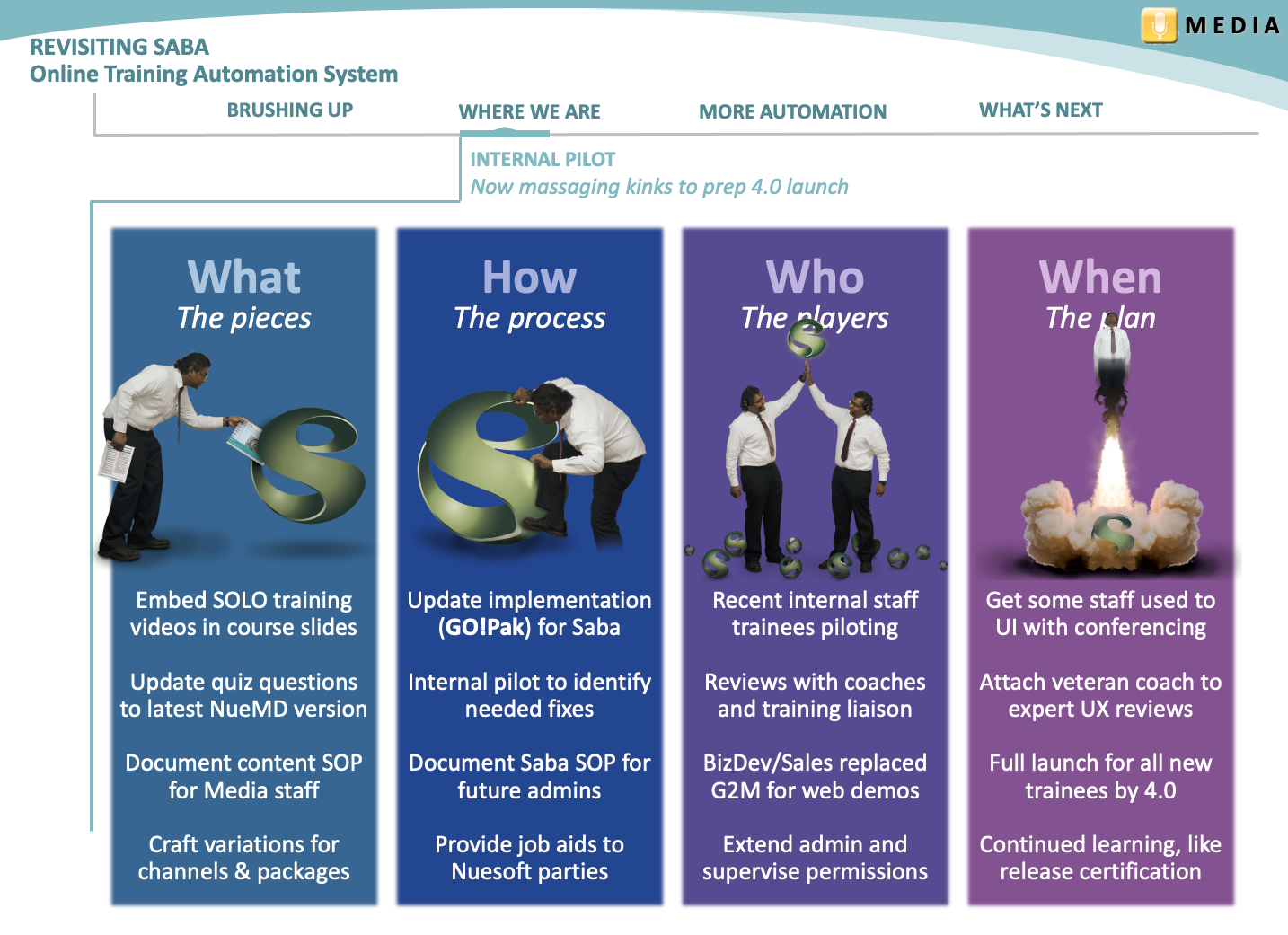
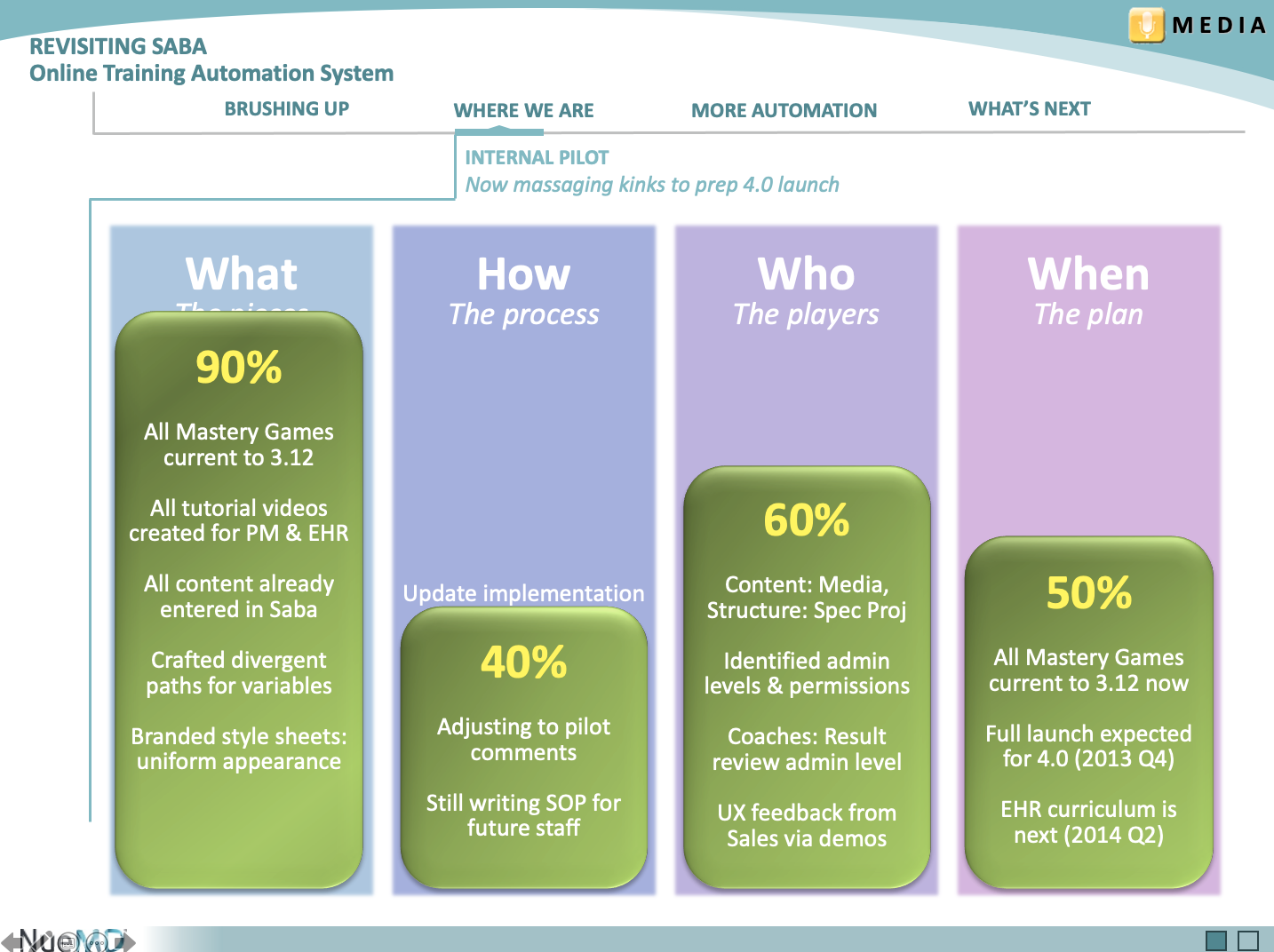
I evaluated learning-platform vendors and helped select Saba as the shared system. The curriculum allowed client staff to sign in on their own schedule, follow learning paths appropriate to their role, complete automatically graded assessments, and practice workflows in a sandbox environment.

Conditional course logic let the system reuse common instructional assets while delivering different sequences to different audiences. Clients no longer needed to wait for five scheduled screen-sharing sessions as the default path to competency.

Human training remained available, but its role changed. Trainers could focus on exceptions, questions, and difficult workflows rather than repeatedly delivering the same foundational material to every new practice.

I led writers and video producers through scripting, storyboarding, recording, editing, review, and publication. Departmental employees appeared as on-screen instructors and subject-matter experts, allowing content review to occur as part of production rather than as a separate late-stage gate.

[GALLERY LEAD ASSET: LMS curriculum or course-playlist screen showing sequence, audience logic, or completion structure.]

[ASSET: One representative tutorial video embedded in the gallery.]

[ASSET: Sandbox exercise or auto-graded assessment.]

[ASSET: Diagram showing shared content branching into role-specific learning paths.]

[CAPTION: “The LMS replaced calendar-gated foundational training with self-paced modules, conditional learning paths, assessments, and a practice environment.”]

[ASSET TASK: Rehost the tutorial videos currently represented by unhosted placeholders. Use a short excerpt or muted preview if client confidentiality prevents publishing a complete lesson.]

Lorem ipsum

Evolution

With LMS curricula now built out for both client onboarding and training, we began to develop internal materials for our own staff. Most of our talent were not domain experts in medical billing. We started producing just-in-time education materials for all staff to bring them up to speed.

Staff tutorial describing a medical patient's "user journey." Toward the end of the video, you can notice the narration becoming unpolished. We had not yet edited this draft's script for brevity or screen time.

Delivery & collaboration

⇪ Back to Top | ⇦ Previous | Next ⇨

I built a cross-department coalition and secured executive support for a shared platform

The project began as an effort to improve client training, but a training-only business case was unlikely to justify a new platform. I met with training, sales, business development, product, HR, and other stakeholders to understand the work each group was repeating and the audiences each group needed to support.

I expanded the proposed system so those departments could use shared infrastructure for client onboarding, customer education, internal training, and other learning needs. This was not simply a funding tactic. Incorporating those requirements made the platform more valuable and prevented individual departments from purchasing disconnected systems.

I consolidated the operational and financial case, presented it to company leadership, and secured budget approval. I then led vendor evaluation and selection, structured the content-conversion program, and managed the writers and video producers responsible for execution.

My role covered the service analysis, cross-department alignment, executive pitch, vendor selection, content architecture, production framework, team management, and rollout strategy. Subject-matter experts validated software procedures, departmental leaders represented their operational needs, and executives approved the shared investment.

[COLLABORATION ASSET: Create a coalition map showing the needs each department brought into the shared platform. Avoid a generic stakeholder wheel; show the actual contribution or benefit for each group.]

[GOVERNANCE ASSET: Show the approval and production model: Department need → Shared prioritization → Script owner → SME review → Production → LMS publication → Release update.]

Validation & iteration

⇪ Back to Top | ⇦ Previous | Next ⇨

I used operational evidence and production controls to refine the system as it scaled

The first onboarding phase supplied the clearest outcome signal: elapsed time from enrollment to onboarding completion fell from approximately four weeks to two.

During the learning-system build, I used several additional forms of validation:

  • Departmental listening confirmed whether the platform addressed recurring internal work.
  • The content inventory tested whether assets remained necessary and distinct.
  • Readability analysis informed script simplification.
  • Word-count estimates improved production planning.
  • Subject-matter experts reviewed procedures during scripting and recording.
  • Automated quizzes tested learner recall.
  • Sandbox exercises let clients practice without risking production data.
  • Release-aligned review kept training synchronized with product changes.

The system was not launched with a mature analytics framework for learner behavior, support-call reduction, or task-level product competency. Those missing measures should be acknowledged rather than replaced with weaker proxy metrics.

[VALIDATION ASSET: Build an evidence ladder that distinguishes:

  • Measured outcome: elapsed onboarding time
  • Operational validation: departmental adoption and reduced manual steps
  • Learning checks: quizzes and sandbox practice
  • Process controls: readability and production estimates
  • Not yet measured: support reduction and task-level competency

This candor will strengthen the case.]

IMPACT

⇪ Back to Top | ⇦ Previous | Next ⇨

I cut onboarding time in half and removed recurring human bottlenecks.

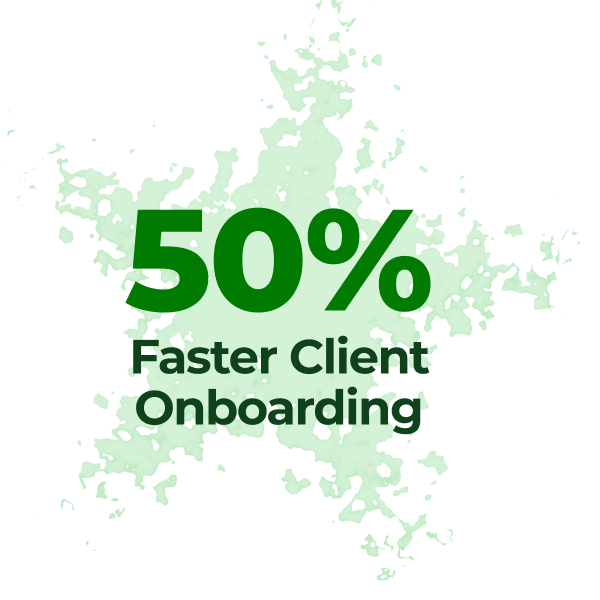
The consolidated onboarding process reduced elapsed time from approximately four weeks to two—a 50% improvement.

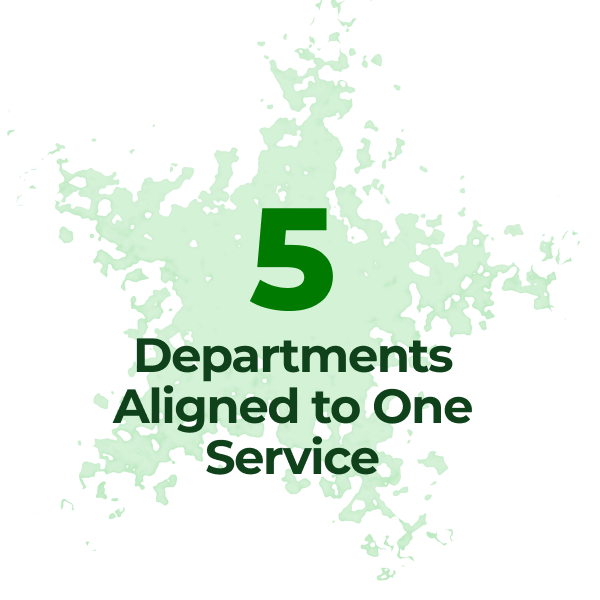
The learning platform then replaced five scheduled foundational training sessions with a self-paced curriculum that clients could complete around the demands of an active medical practice. Paper enrollment steps and fax-dependent workflows were removed, while trainers remained available for questions and higher-value assistance.

Internally, departments stopped treating onboarding as a chain of isolated interactions. The writing team maintained granular, reusable learning assets rather than parallel documents for every audience, and production deadlines became connected to the software release cycle.

The system also expanded beyond its original client-training mandate. The same platform and production process were applied to internal employee education, and the Documentation department evolved into a broader Media function capable of supporting written, visual, and instructional content.

For clients, the result was a faster and more flexible path to competency. For staff, it reduced repeated delivery and administrative coordination. For the business, it created shared infrastructure that served multiple departments and better reflected the cloud-based product the company sold.

[IMPACT ASSET: Lead with a simple duration comparison:

  • Before: approximately 4 weeks
  • After: approximately 2 weeks
  • Result: 50% faster onboarding

Show the definition and source beneath the graphic once verified.]

[SECONDARY IMPACT ASSET: Show “five scheduled sessions” transforming into self-paced modules plus optional human support. Treat this as a service-model change, not a separately measured business metric.]

Metric verification required: Define precisely what marked onboarding as complete. Possible endpoints might include completion of account setup, closure of required implementation tasks, first successful claim submission, or transfer from onboarding to active support. Use the historically accurate endpoint.

Second-outcome recommendation: Search archived reporting, presentations, or departmental records for one of the following:

  1. Scheduled trainer-hours reduced per client
  2. Support calls before and after launch
  3. LMS completion rates
  4. Time from enrollment to first successful product task
  5. Printing, shipping, or inventory costs eliminated

Do not manufacture a second percentage merely to make the metric row symmetrical.

No items found.

REFLECTION

⇪ Back to Top | ⇦ Previous

I learned to question the product before building better education around it.

This project established a pattern that continued throughout my career: the most consequential experience failures often occur in the seams between departments, tools, and ownership.

It also taught me to be more critical of documentation itself. Our team was highly valued partly because the software required substantial explanation. We improved onboarding and education, but with my current product-design perspective, I would push harder on the upstream usability problems creating that instructional demand.

A stronger measurement plan would also have been part of the initial design. I would instrument learner progress, task completion, support contacts, trainer time, and product usage from the beginning rather than relying primarily on the onboarding-duration metric and operational evidence.

The most durable part of the work was not the LMS vendor. It was the operating discipline behind it: evaluate content before migrating it, reuse concepts across audiences, document production standards, connect updates to the product-release cycle, and preserve human support for the moments where it adds the most value.

[REFLECTION ASSET — OPTIONAL: Use the Update / Consolidate / Standardize / Sunset framework as a closing visual. It is both a project artifact and a concise representation of the thinking that should outlive the original platform.]